 LinkedIn
 Facebook
 X.com
X.com
 WeChat
 Email
Email
To receive the Maersk Europe Market Update in your inbox, sign up for our logistics newsletter here and update your preferences when prompted via email. For the latest global updates, please visit the Maersk Global Market Update for winter 2026.
Ocean and Key Ports Update
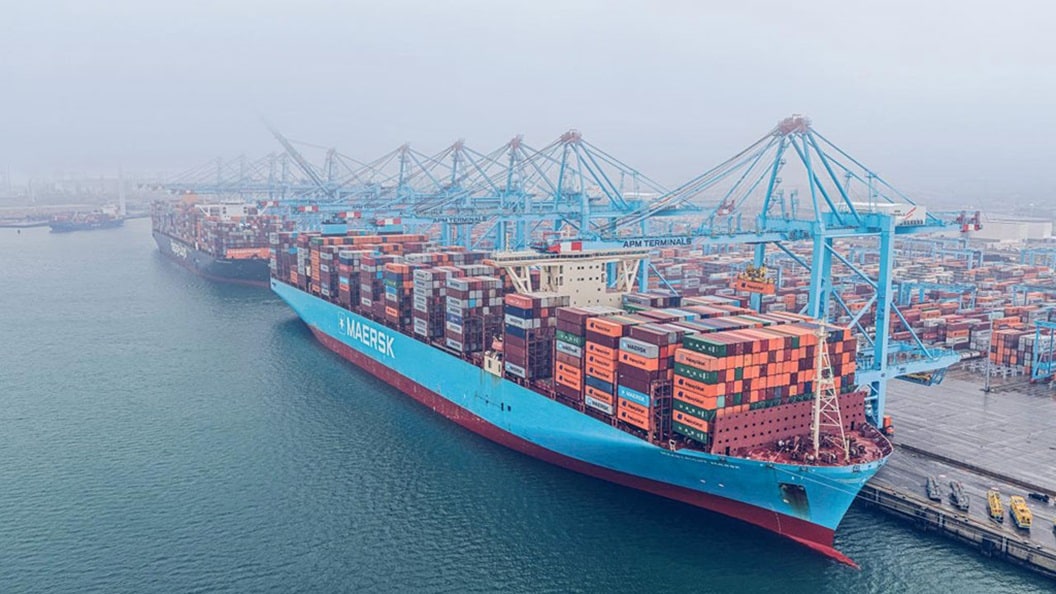
On 19th December 2025, a Maersk vessel sailing on the MECL service successfully completed transit through the Bab el-Mandeb Strait and Red Sea under the highest security conditions. While this is a significant step forward, it is not an indication of a wider network change back to the trans-Suez corridor – which will be completed gradually when it is safe to do so. We will continue to update our Red Sea web page as the situation evolves.
To read more about the prospect of a transition from the Cape of Good Hope network to a trans-Suez offering, how it could come together, and what the impact would be in Europe, please head to this season’s Maersk Global Market Update.
Northern Europe was hit by severe weather conditions at the start of January, with heavy snowfall in areas having an impact on terminals. Hamburg, Rotterdam and Antwerp experienced slower operations and temporary suspensions, resulting in delays for shipments moving through the locations. Our teams continue to closely monitor the situation and implementing measures to minimise delays. Please head to our dedicated advisory page for further updates.
We advise customers to plan for extended terminal dwell times, adjust delivery schedules where possible, and build contingency time into supply chain planning.
Elsewhere at Antwerp, yard utilisation has increased to around the 90% figure at selected terminals and therefore running very close to capacity. Please arrange import container pick-up as soon as possible to help ease congestion and avoid storage-related delays.
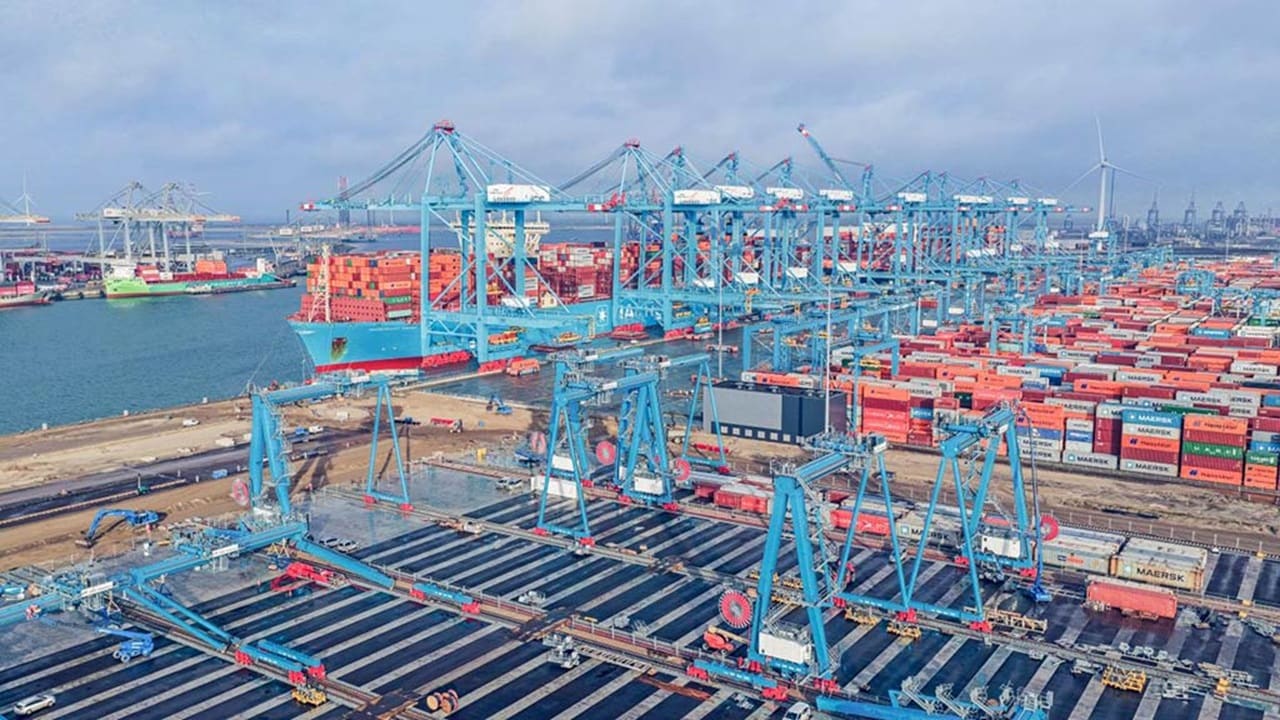
At the Port of Rotterdam, large container vessels are experiencing waiting times of 24–48 hours at some terminals, while barges are seeing shorter delays. Yard utilisation is rising at key terminals, and refrigerated container plug capacity is under pressure at some locations. To help prevent yard congestion, customers are strongly advised to arrange deliveries and import container pick-ups as early as possible, especially for refrigerated cargo.
As Chinese New Year and corresponding peak season approaches, business will be dealing with increased complexity within their logistics operations. Click here to hear from our expert outlining how to optimise efficiency when it comes to SPOT bookings during peak season.
You can receive ETA notifications for your cargo by signing up here.
Inland Update
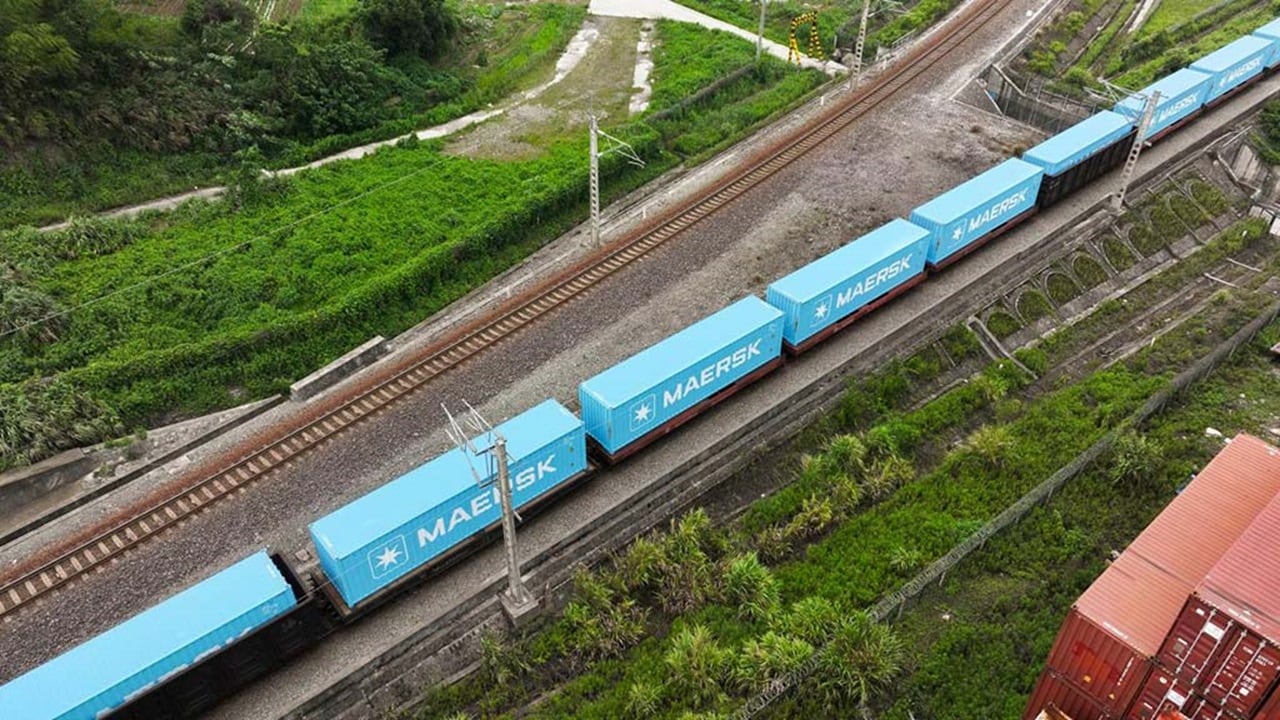
European inland supply chains are continuing to evolve as infrastructure upgrades and regulatory changes take effect across several key markets. These developments are designed to improve long‑term safety, reliability and predictability, but in the near term they may influence inland transit times and import processes. Customers moving cargo beyond the port gate are encouraged to factor these changes into planning and maintain close coordination with their logistics partners.
In Slovenia, major rail infrastructure upgrades are currently under way, temporarily reducing available railway capacity on important inland corridors. While these works are part of a long‑term national programme to strengthen and modernise the rail network, customers may experience reduced rail availability, longer transit times or the need for alternative routing during the construction phase. Maersk is actively managing network planning to minimise disruption and maintain continuity of service wherever possible. Read more details here.
At the same time, Belgium is transitioning to a new import container release framework based on a temporary storage declaration model. This approach, which aligns closely with processes already introduced in the Netherlands, aims to strengthen cargo security, reduce the risk of fraud and provide a clearer separation between customs clearance and physical cargo release. For customers, the change is expected to improve visibility and create a more predictable import flow, provided documentation is submitted accurately and on time. Click here for further information on the transition.
Germany is implementing similar changes to its import container release process at major seaports, reflecting a broader move toward harmonised procedures across Northern Europe. The updated process is designed to make terminal operations safer, reduce unauthorised container pick‑ups and simplify the overall import experience. For customers operating across multiple European gateways, this alignment supports greater consistency and ease of doing business across borders. For more details, head to our advisory page here.
Customers are advised to allow additional lead time for rail movements affected by infrastructure works and to ensure import documentation is correct and submitted early in markets where release processes are changing. Maersk will continue to work closely with customers and partners to navigate these transitions and keep inland cargo flows moving as smoothly as possible.
For more information on ways to connect seamlessly with our rail, road, and barge solutions across Europe, please visit our Inland transportation services in Europe.
Air Freight Update

Europe accounted for a significant share of global air freight growth, driven mainly by strong import volumes and continued demand for time sensitive goods. Industrial sectors such as chemicals and machinery performed particularly well, while technology shipments grew at a slower pace as demand eased in North America. Customers with urgent or high value cargo should continue to view air freight as a reliable option for ensuring speed to market, especially where supply chain flexibility is required.
Capacity conditions remain broadly balanced, although some freighter capacity has shifted toward European and intra regional trade lanes. Customers are encouraged to engage early on capacity planning, particularly for regular flows, to lock in preferred routings and avoid last minute constraints.
Rates increased toward the end of 2025 as markets moved into the traditional peak season, with global air freight rates rising in late October and November. While average rates remain broadly in line with last year, Europe has seen firmer outbound pricing compared with other regions. At the same time, fluctuating jet fuel prices continue to influence overall cost levels. Customers should factor potential short term rate volatility into budgeting and pricing decisions, especially for SPOT or ad hoc shipments.
Looking ahead, space availability is expected to remain generally healthy across most European trade lanes, although tighter conditions may emerge on select routes from Asia with Chinese New Year approaching. To maintain reliability, customers shipping time critical cargo are advised to book early, remain flexible on gateways where possible, and work closely with Maersk teams to optimise routing and lead times. We will continue to monitor air freight market conditions closely and share updates as the situation evolves.
Please click here to find helpful information about Maersk Air Cargo and our services to and from Europe.
Customs Update

From 1st January 2026, the EU Carbon Border Adjustment Mechanism (CBAM) enters its definitive phase and moves beyond emissions reporting alone. CBAM certificates must now be purchased in order to clear imported CBAM goods, including steel, aluminium, cement, electricity and hydrogen. Liability applies only to importers exceeding the applicable thresholds of more than 50 tonnes per year, or more than 50,000 tonnes in a single import. Importers should ensure that importing dates and weights of CBAM goods are accurately recorded within their customs systems. In addition, businesses that have not yet done so must register as a CBAM declarant; from January, CBAM authorisation or proof of application is required, and a valid CBAM account or application reference number is essential to prevent cargo from being blocked or delayed. Further guidance is available from the European Commission.
Elsewhere, the postponement of the EU Deforestation Regulation (EUDR) has now been formally confirmed. The regulation will apply from 30th December 2026, with an extended deadline of 30th June 2027 for certain micro and small businesses, acknowledging the scale and complexity of compliance for operators across global supply chains. Amendments also remove the obligation for downstream traders to submit due diligence statements. Although the application date has moved, businesses are advised to use this additional time to clearly identify roles and responsibilities within their supply chains, including determining who acts as the operator, the trader and any downstream operator. Read more information here.
In addition, the Import Control System 2 (ICS2) is now mandatory for safety and security declarations. Traders moving goods from Great Britain to Northern Ireland, or from other non-EU countries into the EU, must submit pre-arrival Entry Summary Declarations. Businesses may submit ENS declarations via the Trader Support Service or connect directly to ICS2 themselves, but in all cases must ensure that ENS data, arrival notifications and presentation of goods notifications are available and submitted correctly. Further instructions on how to submit these declarations can be found here.
Please don’t hesitate to reach out to our Global Trade and Customs Consultants if you require support with your customs operations.
Ecommerce Update

In this month’s Ecommerce update, we’re diving deeper into the artificial intelligence trends that could define the year ahead.
Retail’s AI transformation is very much under way this year, and chatbots interacting with third parties and acting as personal shoppers for consumers is set to continue booming. AI will find the best deals for consumers and take the strain out of manual searching, which presents a strong opportunity for customers and retailers alike in 2026
AI-powered systems are also analysing browsing patterns, purchase history, and social media behaviour to create targeted product recommendations for shoppers. These recommendations help build more meaningful shopping experiences – so it’s little wonder 92% of companies are exploring this avenue in 2026.
And finally, with AI rewriting the rules of search, there could be less website traffic and fewer opportunities to sell for retailers. The solution will involve adapting selling strategies to be AI-friendly. This includes building feeds that chatbots can interact with and ensuring product listings contain the specific data that algorithms are looking for. No one really knows what the long-term impact of zero-click selling will be, but keeping ahead of the curve on the latest developments will be essential for anyone selling online in 2026.
Our teams are on hand to discuss AI solutions and how your business can stay ahead of the game. Find out more about our Ecommerce delivery solutions for your business by visiting our E-Delivery page.
Useful Links
To sign up for the Maersk Europe customer newsletter, click here and update your preferences when prompted via email.
Check Maersk market updates from across other regions by clicking here.


