
 LinkedIn
 Facebook
 X.com
X.com
 WeChat
 Email
Email

Almost one-fifth of the world’s food supply is lost or wasted a year— costing the global economy roughly US $1 trillion annually, according to the UNEP Food Waste Index Report 2024. And this isn’t just about economics. When crops spoil before they’re sold, it directly undermines global food security, entire communities lose potential incomes and greenhouse gas emissions from decomposing food rise significantly.
Understanding the problem: Food waste versus food loss
When discussing the global food system, terms like ‘food waste’ and ‘food loss’ are often used interchangeably, but they represent very different issues. Despite their similar outcomes — edible goods never being eaten — both happen at different points in the supply chain.
- Food waste in the supply chain occurs at the consumer and retail levels, such as when edible food is discarded due to over-purchasing or expiration. Think grocery stores tossing ugly produce or households discarding leftovers.
- Food loss happens earlier in the supply chain, during harvesting, processing, transportation, or storage — when food spoils before reaching retailers. This may be due to inadequate infrastructure, poor handling, or insufficient storage facilities. Think of a head of lettuce that spoils during transit from a rural region to a major city.
While both are major challenges, focusing on food loss offers a significant opportunity in the logistics sector. Cold chain logistics can help producers and businesses recoup squandered costs, reduce environmental footprint and ensure more food reaches the people who need it most. McKinsey similarly notes that efficient supply chain interventions can cut large portions of upstream losses in food supply chains, benefiting both retailers and manufacturers.
Uncovering supply chain bottlenecks: Where and why food gets lost
-
Poor post-harvest handling
-
Infrastructure gaps and regional disparities
-
Temperature deviations and inaccuracies
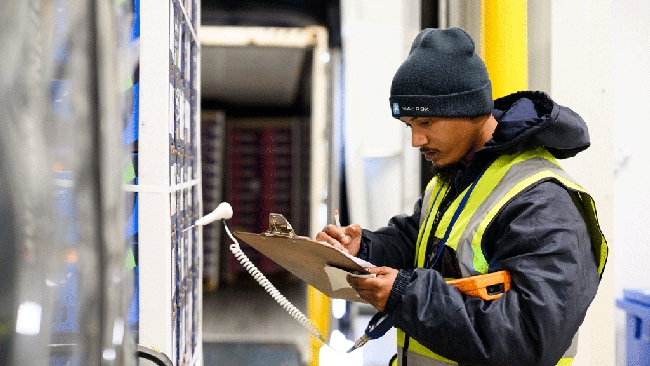
Right after harvest, improper handling techniques or inadequate on-farm storage can cause fruits and vegetables to wilt, bruise or rot prematurely. In hot climates, failing to cool the produce within a few hours of harvest can set off a rapid spoilage process. However, farmers often lack resources such as on-site cooling or proper storage for fresh produce, some of which need to be cooled almost immediately after harvest to slow down spoilage.
Beyond the farm gate, infrastructure issues, such as lack of cold-storage facilities or limited availability of refrigerated containers, cause a major bottleneck. Produce might sit for days in sweltering conditions, drastically reducing its shelf life. These problems tie up with regional disparities and compound further. While developed markets generally have more robust supply chains, they can still struggle with last-mile inefficiencies and inventory mismanagement. In emerging economies, the challenges can be more fundamental, such as limited road networks, intermittent power, inadequate cold-chain investments and limited technical knowledge.
For many fruits and vegetables, even minor breaks in refrigeration can severely reduce a product’s shelf life. A few degrees above or below the ideal temperature range can degrade food quality and slash a product’s marketable life by days, if not weeks. When spoilage happens, it’s not just the food that’s lost, farmers lose income, businesses sink investments and communities miss out on potential nourishment. It’s a chain reaction that drains resources, cuts profits, and exacerbates global hunger.
The power of cold chain logistics: Keeping food fresher, longer
Cold chain logistics involves a coordinated, end-to-end system designed to keep temperature-sensitive goods consistently controlled and properly preserved — right from harvest to final destination. The benefits of cold chain logistics include:
- Pre-cooling to quickly cool freshly picked/harvested goods and halt the natural ripening/breakdown process.
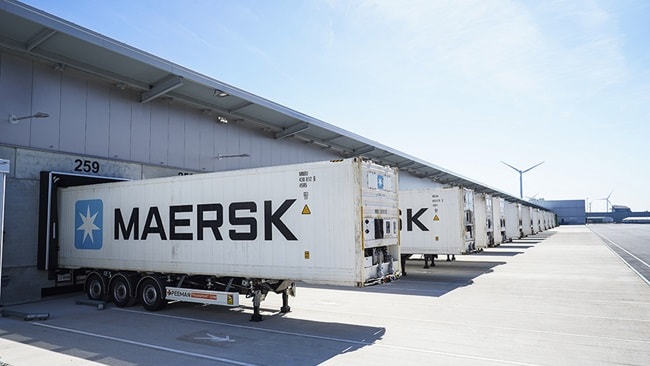
- Properly insulated and regularly serviced refrigerated trucks and containers for keeping perishables in a stable climate during transit across highways or oceans.
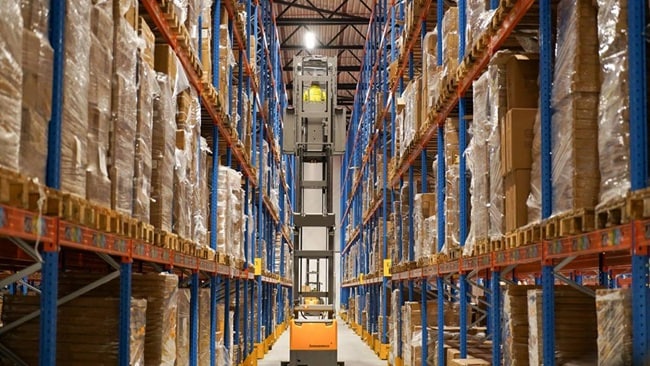
- State-of-the-art cold storage facilities to control temperature and humidity, optimally pre-serving the product shelf-life.
- Smart packaging solutions to control ripening and respiration rates, ensuring that produce arrives at its destination in peak condition.
This all helps significantly extend the product’s shelf life, reducing spoilage and ensuring quality.
Driving impact at scale: How cold chain logistics is the key to managing food loss
Modern technology is redefining what’s possible in cold chain logistics, enabling businesses to maintain stringent quality standards across continents and oceans. Integrated logistics partners are reshaping the way perishable goods are moving globally by fusing innovative solutions with a global logistics network. By choosing the correct partner, businesses can ensure that their supply chains move with more ease and reliability. What should businesses look for:
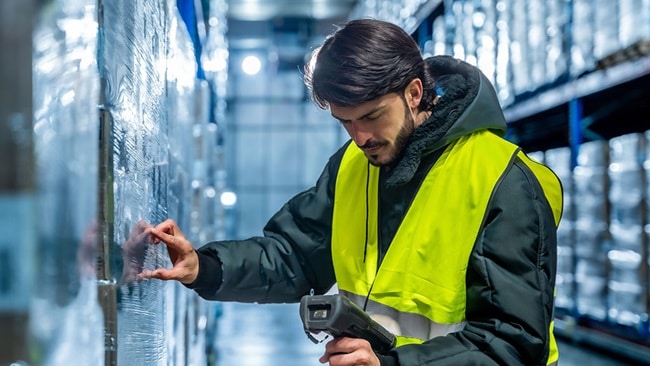
- Real-time monitoring: Smart sensors and trackers placed inside the reefer containers continuously log temperature, humidity, and when required, gas levels. When and if a potential fluctuation occurs, AI-driven alerts enable corrective action, sometimes before spoilage starts.
- Controlled atmosphere (CA): By managing levels of oxygen, carbon dioxide, and nitrogen, CA slows down ripening and spoilage. This is effective for highly sensitive refrigerated cargo such as berries, avocados and mangoes, which might otherwise degrade quickly over long distances. This approach extends shipping windows, helping food travel distances without sacrificing freshness.
- Equipment maintenance: Preventative work such as PTI (pre-trip inspection), cleaning and analytics, reduce the chance of equipment failure during transit by anticipating potential reefer unit breakdowns.
Thanks to Maersk’s Remote Container Management system (RCM), customers can easily visualise data such as temperature, relative humidity, oxygen and carbon dioxide levels through the commercial CaptainPeterTM platform. RCM also assists to identify faulty components and carry out maintenance requirements, through an advanced analytic algorithm.
Ultimately, whether you’re a grower, distributor, or retailer, investing in integrated cold chain solutions is the key to reducing food loss and building a more resilient food supply for the future.

Get insights from an industry expert
How can you make your logistics interconnected?
Reduce complexity with an all-in-one solution where your business only has to deal with one partner to service all your supply chain needs from start to finish.
Learn more about how Maersk can help with integrated logistics.



Don’t miss out on logistic news and updates from us
You did it, welcome onboard!
We're sorry, but there was a problem sending your contact request.
Please review the form fields and ensure all required information is provided correctly. If the issue persists, please contact our support team for further assistance.
Don’t miss out on logistic news and updates from us
Sign up here and receive news and insights that help you navigate supply chains, understand industry trends, and shape your logistics strategy.
I agree to receive logistics related news and marketing updates by email, phone, messaging services (e.g. WhatsApp) and other digital platforms, including but not limited to social media (e.g., LinkedIn) from A. P. Moller-Maersk and its affiliated companies (see latest company overview). I understand that I can opt out of such Maersk communications at any time by clicking the unsubscribe link. To see how we use your personal data, please read our Privacy Notification.
By completing this form, you confirm that you agree to the use of your personal data by Maersk as described in our Privacy Notification.