
 LinkedIn
 Facebook
 X.com
X.com
 WeChat
 Email
Email

Once a far-off concept, artificial intelligence has become a practical tool in logistics and is now an important factor when choosing a lead logistics provider. Companies today should be aware of how 4PL partners are using AI and automation to deliver real operational improvements. Increasingly, logistics decision-makers want to see AI-driven capabilities, like richer end-to-end visibility or faster data-driven decision-making during disruptions, built into their provider’s services.
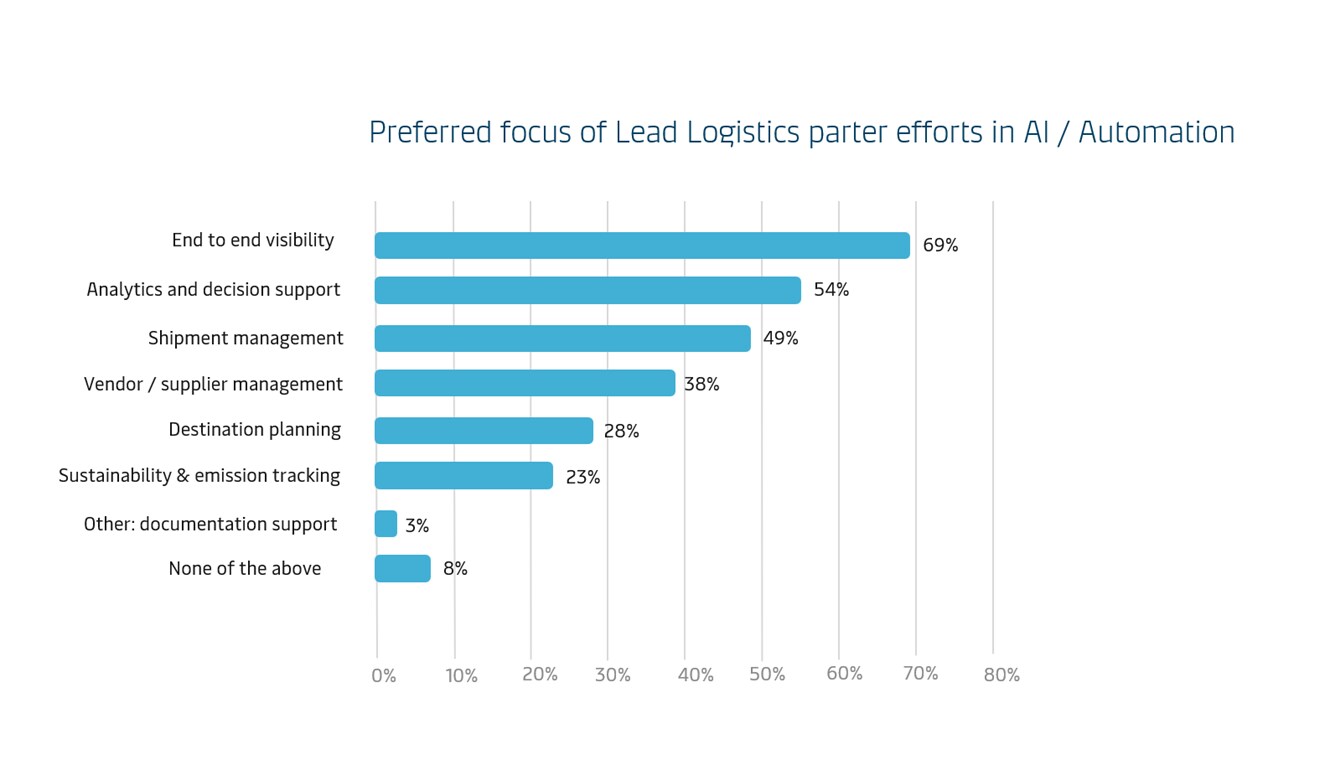
A recent Maersk survey of North American supply chain executives confirms these priorities. Nearly 70% of respondents named end-to-end supply chain visibility as the top area where they want a lead logistics provider’s AI and automation efforts focused. Over half also prioritised advanced analytics and decision support from their providers, and nearly as many highlighted AI to improve shipment execution management. A significant number (around 38%) even pointed to vendor and supplier management as a key focus for logistics AI. These preferences show that customers are looking for AI investments which directly enhance day-to-day logistics performance.
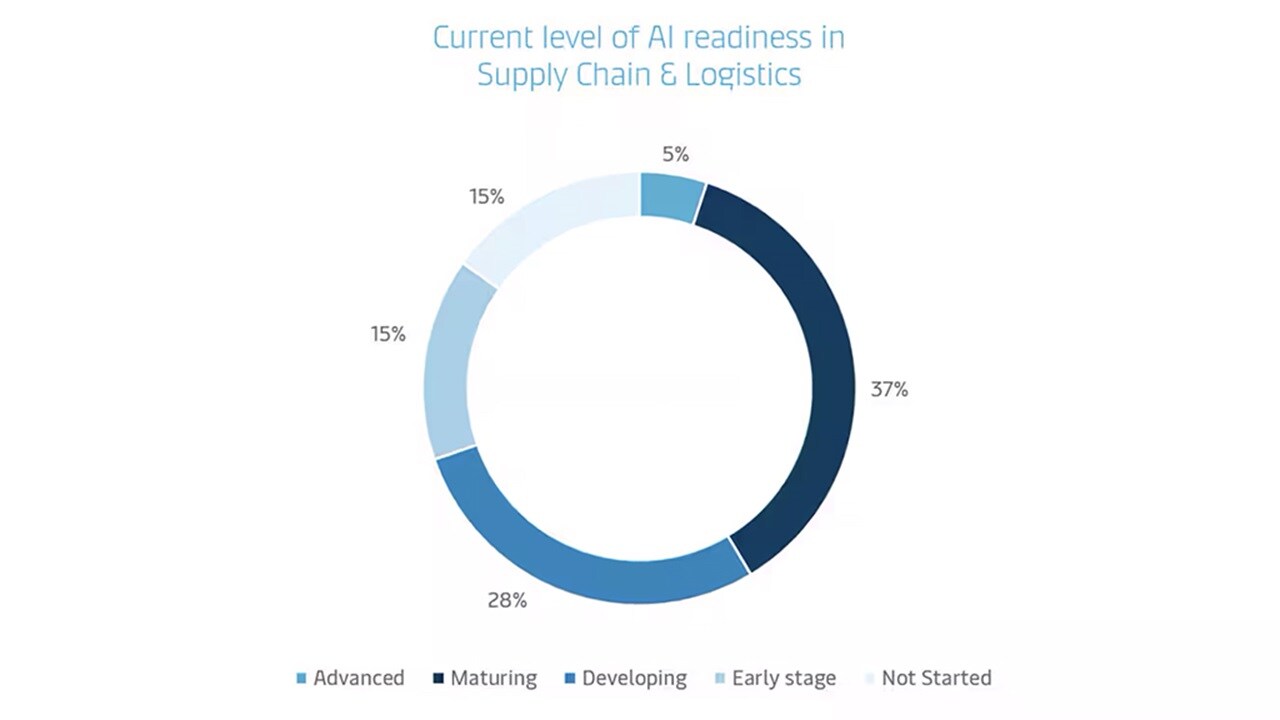
The survey also revealed that only about 5% of companies consider their own logistics AI capabilities to be “advanced,” while the vast majority say they are still developing or maturing in this area. Since most firms aren’t yet AI experts, it’s crucial for a lead logistics partner’s AI solution to be both sophisticated and easy to use. Effective logistics AI should help teams work smarter – delivering value quickly in areas like visibility and decision-making support – without requiring the customer to build up deep in-house technical expertise.
Given these findings, businesses evaluating a lead logistics partner’s technology should focus on the same core capabilities that supply chain leaders emphasized in the survey. Does the provider offer robust, real-time visibility across your entire supply chain? Do they provide advanced analytics that turn data into actionable insights for planning and decision-making? Are they using AI to automate repetitive tasks and proactively manage exceptions? And can their platform improve vendor and supplier management through better data and coordination? These are precisely the capabilities that customers say will bring tangible benefits in daily operations.
Above all, an AI-enabled logistics provider should have such solutions already embedded in its platform, so you can benefit from them immediately without having to develop them from scratch. Maersk Lead Logistics, for example, has aligned its own AI investments toward exactly these areas – integrating end-to-end visibility, advanced analytics, and AI-driven execution optimisation into its lead logistics services. As AI becomes an everyday part of managing supply chains, choosing a provider with an operations-focused AI strategy can give your business a real competitive edge.
To learn more about Maersk Lead Logistics, visit Maersk Lead Logistics, and keep up with other logistics industry insights and trends on Maersk Logistics Insights.
Note: Survey was conducted from April 1-22, 2026, among Maersk customers in U.S. and Canada. 95 customers responded in total and 39 respondents answered the two survey questions shown in this article.


