 LinkedIn
 Facebook
 X.com
X.com
 WeChat
 Email
Email
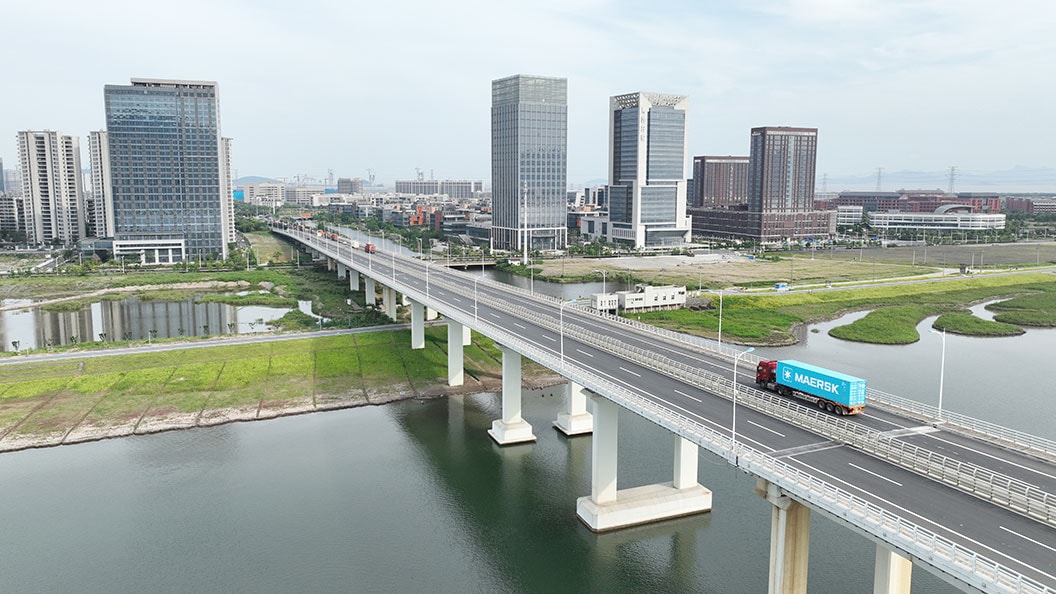
You don’t notice depots until something breaks
In global logistics, attention tends to focus on what moves. Vessels, ports, cargo flows. That is where activity is most visible.
But when disruption hits, that perspective shifts. What has always been there becomes visible, fixed in place but quietly controlling flow. Container depots rarely attract attention, yet they determine whether your supply chain continues to operate or begins to stall.
When port congestion increases, the ability to reposition containers, maintain turnaround times, and keep inland flows moving becomes critical. This is where depot performance is tested.
Across Latin America, this role is becoming impossible to ignore.
You are no longer managing storage. You are managing control.
Thinking of depots as storage locations no longer reflects reality. Their role has expanded into something far more strategic.
This means managing where containers sit, how quickly they are turned, and whether equipment is available at the right moment. That level of control directly shapes cost, reliability, and customer experience.
As supply chains become more integrated, this control becomes essential. Depots are no longer peripheral assets that support the system. They are part of how the system is designed.
When disruption increases, dependency becomes visible
The importance of depots becomes clearest when disruption enters the system.
Congestion, schedule instability, and infrastructure constraints all place pressure on your network. In those moments, depots act as a stabilising layer, allowing inland logistics to continue operating even when terminals are constrained.
Research highlights how off terminal depots are being used to absorb volume surges and maintain cargo flow at key gateways:
Without that buffering capacity, disruption does not stay contained. It spreads quickly across the inland network, affecting equipment availability, delivery timelines, and ultimately customer confidence.
In Latin America, the need is structural
In many regions, depots improve efficiency. In Latin America, they are often fundamental to making the system function.
Latin America plays a critical role in global trade, but infrastructure development has not kept pace with demand. As a result, supply chains operate with tighter margins for error, where congestion, inland bottlenecks, and equipment imbalances are part of daily operations.
In this context, gaps in depot capacity translate directly into operational challenges. You see it in delayed container availability, inefficient repositioning of empty equipment, and higher overall costs.
A well-positioned depot network offsets these constraints by bringing stability and proximity to where demand actually exists.
You need capacity where demand exists
The conversation is no longer about total capacity, but placement.
When depot networks are distributed across inland corridors and production hubs, they reduce reliance on ports and shorten the distance between equipment and customers. That proximity removes friction.
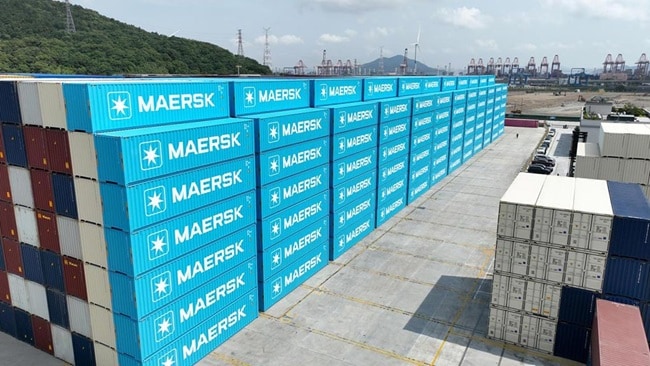
Across Latin America, Maersk’s network spans more than 1.75 million square metres, with strong presence in Chile, Brazil, and Peru, alongside growing coverage in Central America and the Caribbean.
This scale matters, but it is the positioning that defines its value. While ports across Latin America handle close to 40 million TEU each year, the movement of containers does not stop at the terminal. A significant share of activity continues inland, where depot networks play a growing role in managing flow and equipment availability.
Growth is adding pressure, not reducing it
Global trade continues to expand, increasing the complexity of supply chain management.
Growth does not just increase volume; it increases the cost of inefficiency. Without the right depot footprint, higher volumes translate into longer cycle times, higher repositioning costs, and reduced service reliability.
Container volumes reached 192.9 million TEU in 2025, with sustained monthly volumes above 16 million TEU. Early data for 2026 points to continued growth, reinforcing the need for scalable infrastructure that can support rising demand and increasing supply chain complexity.
Looking ahead, this footprint is set to expand significantly. Ongoing investments across the region, including new sites and capacity expansions, are expected to scale the network. Recent openings and expansions, such as Rio Grande and Paranagua in Brazil and Tocancipa in Colombia reinforce this expansion, strengthening inland connectivity and supporting growth markets.
That growth increases not just volume, but the need for flexibility, responsiveness, and coordination.
Depots play a central role in responding to that pressure, particularly in managing empty container flows and enabling a more agile network that can adjust to shifting demand patterns.
Expectations have shifted from capacity to performance
Customers are no longer asking whether capacity exists. They are asking whether it works.
They expect equipment availability, shorter turnaround times, and consistent service.
Meeting those expectations requires depots to operate very differently than they did in the past.
Today, depots function as integrated logistics hubs, supporting container preparation, cargo handling, and coordination with inland services. The focus is no longer on holding assets, but on preparing them to move efficiently.
Visibility and integration define the next phase
Speed alone no longer defines performance. Visibility and predictability have become equally important.
This includes real-time visibility on equipment status, better coordination with trucking flows, and integration with planning systems that enable faster decision-making when conditions change.
Depot operations are evolving to meet this expectation, with increasing use of digital tools and closer integration with trucking, customs, and inland logistics services.
As these connections strengthen, depots become embedded in the end-to-end supply chain, enabling a more seamless and controlled flow of goods.
You are moving depots into the strategic core
What was once considered supporting infrastructure is now part of your strategic foundation.
A strong depot network enables you to
- reduce exposure to terminal congestion
- respond more effectively to disruption
- position equipment closer to customer demand
- optimize container repositioning and reduce logistics costs
More importantly, it enables a shift from reacting to uncertainty to managing it with greater control.
The question you should be asking
The role of depots is evolving quickly. The question is not whether you need them, but whether your network is positioned to support the reality you operate in.
Because resilience is no longer built at a single point in the chain. It is built across the network.

About the author
Oscar Montejo is Head of Depot for Central America, Andina and the Caribbean (CAC) at A.P. Moller – Maersk, where he leads multi-country depot operations across the region. He brings more than 25 years of experience within Maersk, spanning depot management, supply chain operations, maintenance and repair, customer delivery, and finance. Oscar is responsible for driving a unified depot strategy across markets. His work focuses on strengthening container availability, improving inland connectivity, and advancing depot networks as integrated logistics hubs within end to end supply chains.