LinkedIn
 Facebook
 X.com
X.com
 WeChat
 Email
Email

From 1st July 2026, the European Union (EU) will abolish its long standing €150 de minimis duty exemption, meaning that every imported item will require full customs clearance and incur duties. For an economy that processed 4.6 billion low value parcels in 2024, 91% of which came from China, this marks a fundamental shift in how goods enter the EU. What once allowed millions of low-cost items to move seamlessly into Europe will now require full declarations, accurate data and a formal customs process for every shipment.
The change mirrors the earlier move by the United States, having tightened its own de minimis regime for China-origin goods towards the end of 2025. The US experience offers a clear preview of what Europe could potentially expect: a sharp pivot from millions of individual low-value parcels to more consolidated bulk freight, a rapid expansion of domestic fulfilment centres, higher compliance workloads for sellers and marketplaces, and a noticeable rise in cross-border lead times during the transition.
Here we take a look at the key impact areas that lifting the de minimis exemption will have on European businesses and the resulting ripple effects across supply chains.
New financial and compliance burdens
For businesses, the most noticeable impact at first will be a new financial burden. Low-value items of all kinds – fashion accessories, small electronics, homeware, lifestyle goods and automotive components – will now attract either an interim €3 per-item duty or, once new customs IT systems are fully operational, the standard tariff rate based on the HS code of the product. This forces companies to rethink their pricing, margins, and route-to-market models, particularly those that rely heavily on products from Asia.
At the same time, compliance obligations will increase sharply. Every shipment must now carry a full customs declaration, complete HS classification, validated valuations and comprehensive product data. Marketplaces will be held increasingly accountable for the accuracy of seller information, and mistakes could prove costly.
Operationally, the biggest pressure will fall on customs gateways. Even with significant investment in digital systems, the sheer uplift in declarations will create 1–3 days of additional clearance time for cross border parcels, particularly during peak retail periods.
The ripple effect on lead times
With millions of additional parcels undergoing full customs procedures for the first time, cross-border lead times could also be impacted. Businesses should anticipate slower and less predictable transit times, especially during seasonal peaks when customs networks see maximum volumes.
This will drive a need for larger European safety stocks, better demand forecasting and more careful seasonal planning – particularly for sectors with tight time to market expectations, such as fashion, electronics, and automotive parts.
Different industries will indeed feel the impact in different ways. Fast fashion will experience both duty-driven cost increases and a structural need for more EU-based inventory. Electronics manufacturers may escape major duty exposure thanks to low tariff rates but will still face administrative pressure from detailed documentation requirements. Automotive suppliers must rethink urgent parts strategies that previously relied on low-cost air courier shipments from Asia. Meanwhile, FMCG and chemicals will see less change at scale but may face challenges in niche or direct to consumer flows.
Warehousing and inventory boom
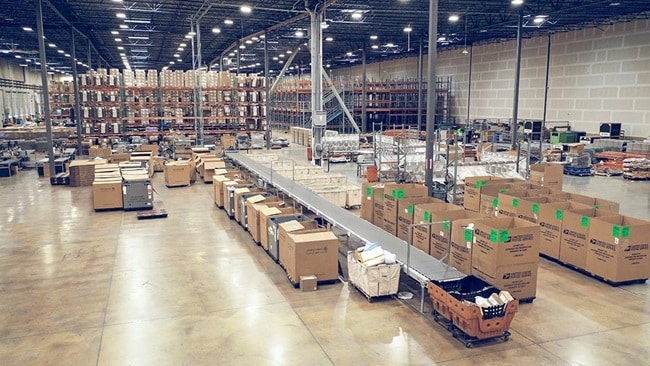
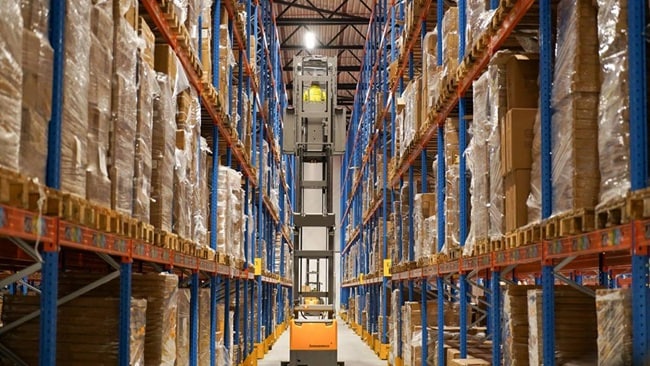
Warehousing demand in the EU is expected to rise sharply as businesses shift from parcel by parcel duty payments to bulk import models. By clearing goods once and storing them in Europe, companies can bypass customs entirely at the point of order fulfilment, protecting service levels and avoiding congestion at entry points.
This shift will inevitably elevate inventory levels within the EU. Brands that previously operated lean inventory models will now need deeper safety stock, especially for fast-moving items and time critical components. However, this shift also increases the risk of overstocking, stranded inventory, and tied-up working capital, so demand forecasting will be important on the road to success. At the same time, returns processing becomes easier and more efficient when goods are held domestically rather than sent back overseas, further reinforcing the move toward regional fulfilment.
Global trade pattern shift
Beyond Europe, the end of de minimis will influence global trade patterns. As both the EU and US tighten rules on low-value imports, exporters may redirect attention to emerging markets where thresholds remain higher. This could prompt similar enforcement responses in those regions, particularly if local industries begin to feel competitive pressure. Meanwhile, manufacturers may reconsider their global footprints, such as diversifying beyond China, exploring near shoring options, or adjusting storage locations to reduce duty exposure.
Taken together, the removal of the de minimis rule marks one of the most significant supply chain inflection points in Europe in more than a decade. Businesses must now focus on compliance, inventory strategy, cost management and regionalised logistics if they want to maintain competitiveness in 2026 and beyond.
Taken together, the removal of the de minimis rule marks one of the most significant supply chain inflection points in Europe in more than a decade. Businesses must now focus on compliance, inventory strategy, cost management and regionalised logistics if they want to maintain competitiveness in 2026 and beyond.
Please don’t hesitate to reach out to our Global Trade and Customs Consultants if you require support with your customs operations ahead of the EU’s de minimis rule change.