LinkedIn
 Facebook
 X.com
X.com
 WeChat
 Email
Email
The global trade architecture entering 2026 has moved beyond incremental modernization. It is undergoing structural realignment. Multilateral predictability has weakened, regional blocs are consolidating influence, and customs authorities are integrating fiscal, logistical, and financial data at unprecedented levels.
For major Latin American economies such as Brazil, Argentina, and Mexico, trade compliance is no longer an administrative checkpoint. It directly influences treasury strategy, sourcing decisions, logistics design, and working capital efficiency.
In this environment, competitive advantage depends on combining regulatory intelligence, technological readiness, and supply chain architecture.
1. Geopolitics and the New Trade Architecture: The Rise of Corridor Diplomacy
The relative weakening of the World Trade Organization has accelerated a shift toward bilateralism and corridor-based trade diplomacy. Global trade is increasingly structured around strategic routes and regional alignments rather than universal frameworks.
The Pacific Gravity Shift
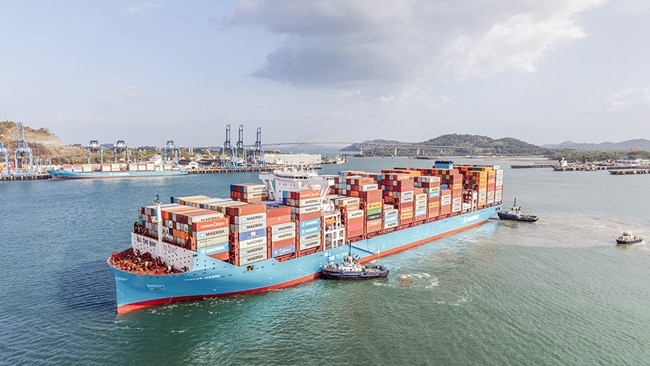
The Port of Chancay in Peru has reconfigured Asia–South America logistics flows. In its first full year of operation, it processed more than 270,000 containers and reduced transit times by up to two weeks. This is not merely a logistical improvement — it materially alters inventory cycles and working capital exposure.
EU–Mercosur Interim Trade Agreement
The interim agreement between the European Union and Mercosur prioritizes industrial tariff elimination while bypassing broader political complexities. Its provisional application could reshape sourcing strategies across automotive, machinery, and chemical sectors.
India–Mercosur Expansion
The expansion of tariff preferences reflects a deliberate diversification strategy, reducing dependency on concentrated trade partners.
Expected Impact for 2026:
- Companies can no longer assume tariff stability over multi-year planning horizons. Trade conditions are increasingly shaped by geopolitical alignment rather than multilateral norms.
- Sourcing strategies must incorporate “origin sensitivity” analysis. A lower procurement price may be offset by MFN exposure or corridor inefficiencies. At the same time, newly activated agreements require immediate reassessment of Rules of Origin qualification.
- Transit time reductions across Pacific routes also modify safety stock assumptions and inventory financing costs.
- Trade architecture is becoming dynamic rather than static.
2. Brazil’s Regulatory Revolution: From Paperwork to Data Precision
Brazil is implementing its most significant customs transformation since the 1990s. The gradual decommissioning of Siscomex under Ordinance 165/2024 marks the end of transaction-based corrective compliance. By March 2026, DUIMP becomes mandatory for most import transactions.
This represents a shift from document correction at clearance to pre-validated data architecture: the era of "fixing it at the border" is over, from transaction-by-transaction reviews toward a system based on continuous risk assessment and pre-validated master data.
The Product Catalog Requirement
Importers must register SKUs with standardized attributes defined by the government. In practice, clearance begins during master data validation rather than at shipment arrival.
Dual-VAT Implementation (CBS/IBS)
Complementary Law 214/2025 introduces transitional CBS and IBS rates. Although financial impact in 2026 is limited, reporting requirements are absolute. ERP systems must reconcile customs declarations with tax obligations seamlessly.
Economic Authorized Operator (AE) and other Compliance Program as a Financial Strategy
Participation in compliance & trusted traders’ frameworks such as Programa Brasileiro de Operador Econômico Autorizado (OEA) provides procedural benefits and allows deferral mechanisms that directly impact cash flow management.
Expected Impacts
- Compliance shifts from reactive documentation management to proactive data governance.
- Organizations must ensure synchronization between ERP master data, product catalog attributes, tax engines, and customs declarations. Misalignment will no longer be correctable post-factum without financial consequences.
- Customs operations are increasingly intertwined with treasury performance.
3. National Regulatory Shifts Across Latin America: The Protectionist Surge
Governments across Latin America are recalibrating trade policy to address fiscal pressures and industrial priorities. The region is no longer aligned in one direction, with use of customs enforcement, tariffs, and taxation to address fiscal deficits and protect local industries.
Mexico’s Defensive Measures
In anticipation of the USMCA review, Mexico increased MFN duties on more than 1,400 tariff lines. This introduces substantial exposure for companies reliant on non-FTA inputs.
Argentina’s Liberalization Window
The lifting of capital controls and expiration of certain distortionary taxes have temporarily reduced trade barriers, creating short-term expansion opportunities.
Brazil’s Trade Defense Intensification
Brazil has expanded anti-dumping measures and adjusted tariff lines (increasing Import Duty rates for certain strategic goods) through GECEX resolutions to reinforce domestic industries.
Brazil is not just modernizing customs processes, it is reshaping its compliance logic in foreign trade, moving away from a transaction-based documentation model toward a predictive approach built on structured data.
Expected Impacts
- Regional compliance can no longer be managed in isolation by country. Tariff volatility requires continuous monitoring and recalibration of sourcing strategies.
- Supply chains designed under static duty assumptions are exposed to margin erosion.
- Real-time tariff intelligence and multi-jurisdictional coordination are becoming operational necessities.
4. Logistics Resilience and the 2026 Roadmap: The End of Voluntary Compliance
Climate risk, infrastructure constraints, and geopolitical tension are redefining logistics resilience. Simultaneously, customs authorities are integrating fiscal and financial data streams, reducing tolerance for discrepancies.
Environmental Market Access Conditions
European sustainability regulations introduce traceability obligations for commodities such as soy, beef, and coffee. Compliance is transitioning from reputational to mandatory.
Predictive Audit Models
Authorities increasingly deploy AI-based risk engines comparing customs, tax (SPED), and financial filings.
Route Diversification Strategies
Initiatives such as bioceanic corridor studies reflect strategic efforts to reduce dependency on constrained maritime routes.
Expected Impacts
- Trade attributes now include environmental compliance and carbon exposure.
- Data inconsistencies across financial, tax, and customs systems are likely to trigger automated review processes.
- Resilience is increasingly defined by data integrity rather than buffer inventory.
The 2026 Strategic Conclusion
The regulatory landscape of 2026 acts as a filter rather than a barrier.
Organizations that treat customs as an administrative burden will experience volatility as cost. Those that treat it as a strategic capability can convert compliance into:
- Margin preservation
- Cash flow optimization
- Faster clearance
- Reduced audit exposure
- Market access continuity
The convergence of geopolitics, tax reform, digital customs, and environmental regulation is not temporary. It reflects a structural shift in how trade operates in Latin America. For supply chain leaders, the question is no longer whether change is coming, but whether internal architecture is prepared for it.
Navigating this transformation requires integrated visibility across customs regulation, tax reform, trade agreements, and logistics design. Organizations operating in Latin America increasingly benefit from combining regulatory advisory, digital readiness, and supply chain engineering under a unified governance approach.
For additional guidance and support on navigating these changes, please contact Carlos Sueitt at Maersk.