 LinkedIn
 Facebook
 X.com
X.com
 WeChat
 Email
Email

Tight lead times and the shorter shelf life of goods mean the fast-moving consumer goods (FMCG) industry is particularly exposed to disruption. With persistent economic uncertainty and more frequent and sometimes devastating external shocks, building and maintaining resilient supply chains is only getting harder.
The cost of disruption is high. Maersk’s latest research conducted together with FT Longitude, Course for Change, reveals that, on average, FMCG companies lost 3.7% in revenue to disruption in their most recent fiscal year. In an unpredictable landscape, agility has become the defining feature of resilience – and businesses are turning to supply chain partners for support.
Our research compares ‘frontrunners’ (companies with revenue losses of less than 1% of revenue in their past fiscal year) and ‘followers’ (companies with losses of more than 5% of revenue). We look at how these two groups are responding to disruption.
Achieving agility is a difficult balancing act
Geopolitical volatility, mounting regulatory requirements and climate-related shocks add new layers of risk for supply chains.
For FMCG companies, disruption can strike anywhere – from procurement constraints to logistics bottlenecks in transport and warehousing. Incidents are often sudden and unpredictable, and even brief interruptions in supply can cascade into crisis. A single unplanned outage at a critical site can trigger ripple effects across production and distribution networks, cutting stock availability overnight.
In such a complex and unpredictable landscape, resilience hinges on an agile response. But FMCG companies are struggling in this respect. Minimising downtime from disruption is the number one area businesses experienced setbacks in the past year. Moreover, 85% of FMCG businesses say the cost of achieving agility is a key challenge when it comes to building resilience.
Building flexible foundations
Sustaining product flow under challenging conditions requires a nuanced approach. Businesses must be able to reallocate production, reroute shipments and switch suppliers to minimise the disruption-related costs. As Jacob Nielsen, chief procurement officer at Nestlé, explains, “When faced with unexpected supply disruptions, speed is everything. We always have a contingency plan in place – whether it’s a backup supplier or additional inventory – to ensure we can pivot quickly and efficiently and maintain business continuity.”
FMCG companies are implementing a range of strategies to fortify their response to disruption. Around half are investing in technology and automation to enhance decision making and cost efficiency. And almost 9 in 10 (88%) say collaboration is critical to preparing adequately for disruption and developing alternative strategies.
But for solutions to be effective, businesses must first ensure they have the right internal capabilities. Some companies are taking significant steps. In 2024-25, Colgate-Palmolive trained over 16,0000 office-based employees in the use of AI tools as part of a broader strategy to build AI literacy, collaboration and cross-functional efficiency.
Frontrunners are taking a similar approach. They are more likely than followers to recognise the need to build strong internal collaboration and relationship management skills to engage collaboratively with supply chain partners.
Collaborating for adaptability
Strong partnerships with logistics companies are among the most important when it comes to building adaptive capacity. These partners handle products at some of the most critical points in the supply chain and are often the last touchpoint before goods reach the customer.
The frontrunners recognise the value of these relationships. They are 15 percentage points more likely than followers to turn to logistics service providers (LSPs) for support with supply chain design, and 10 percentage points more likely to develop collaborative contingency plans with partners.
Because they operate across vast networks of sectors and regions, LSPs also offer access to information that can build critical visibility. But many FMCG companies are failing to capitalise on this: enhanced data sharing with supply chain partners is the top capability they say they lack when it comes to balancing agility with stability.
By sharing information through integrated platforms, predictive analytics and scenario planning, LSPs can help FMCG companies adapt more efficiently when disruption hits.
How Maersk supports agility
Maersk Contract Logistics
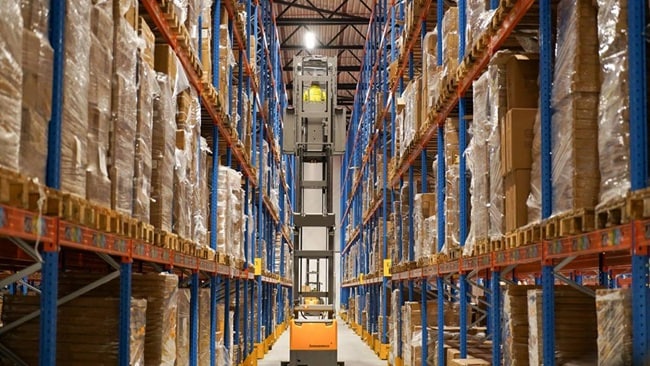
Our warehousing and distribution services, supported by a global network of facilities, provide fast, efficient consolidation, inventory management, and order fulfilment, enhancing agility, visibility, and overall efficiency.
A multitude of transportation services
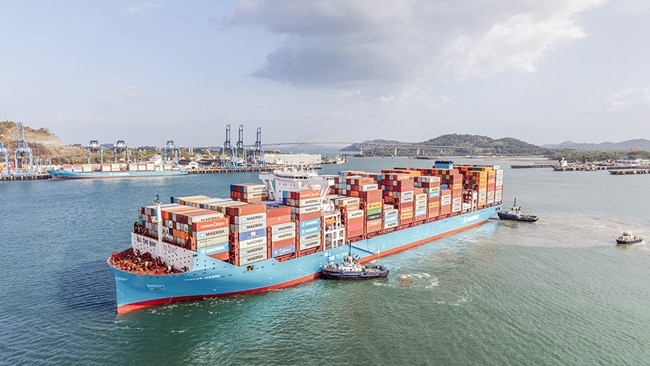
We serve our customers with frequent departures on all major ocean trade lanes, air freight services across 75,000 trade lanes, as well as comprehensive services for smooth end-to-end inland transportation of goods and services.
Maersk Visibility Studio
Our real-time shipment tracking solution provides predictive and actionable insights into disruption, port congestion, lead-time reliability and demurrage & detention management, on a single platform.
Global Supply Chain Management
Our digitally enabled services streamline logistics through integrated data, agile operations and continuous optimization to bring end-to-end control, visibility and efficiency to supply chains.
As FMCG companies look to build resilience, agility is essential. It’s no longer just about putting out fires. Agile means anticipating challenges and pivoting quickly to address them. Building adaptive resilience is the objective – but achieving it is far from straightforward. As evidenced by our frontrunners, the businesses that succeed in this environment are partnering for resilience: sharing data, digital tools and intelligence for agile, more effective responses.
Three imperatives for agility
- Ensure visibility across the supply chain: Harness shared digital infrastructure such as control towers, data dashboards, and predictive tools, for end-to-end visibility.
- Prioritise agility over short-term cost saving: Design supply chains that can pivot between suppliers, transport modes or routes, while maintaining service levels.
- Collaborate for expertise: Partner with LSPs to share intelligence, cross-industry insights and operational expertise that will strengthen real-time decision making.
Be ready for intelligent supply chain resilience to go all the way! Explore the full Course for Change report and learn more about Maersk Supply Chain Resilience Model, or for more logistics trends and insights, read and download The Logistics Trend Map.

About FT Longitude
At FT Longitude, we harness the power of intelligence with influence to leave a lasting impression on the world of business. With a focus on pioneering thought leadership strategies, we create high-impact campaigns that transform perceptions. We craft powerful insights that engage key decision-makers, and using creative storytelling techniques, we imprint brands with unforgettable messages that resonate. Part of the Financial Times Group, we help brands reach and connect with the world’s most influential people, through the FT’s 21 million monthly global readers. Visit longitude.ft.com and find us on social media.