
 LinkedIn
 Facebook
 X.com
X.com
 WeChat
 Email
Email
Select highlights from our progress in 2025


Maersk’s ambition to reaching net-zero
Global supply chains connect the world, keep economies running and choreograph the movement of goods and services that are essential to our way of life. They are also responsible for around 11% of global greenhouse gas (GHG) emissions.
As a key player in global logistics, Maersk is taking purposeful action to reach net-zero GHG emissions across our operations—to the benefit of our customers and society while reducing transition risks for our business and shareholders.
This large and complex challenge has many critical external dependencies. Therefore, our energy transition is an ongoing learning exercise and we continue to learn and adapt - always with our decarbonisation targets as an end-goal. Our approach is to decisively act and invest in areas we control, as outlined in our transition plan, while driving stakeholder engagement and advocating for progress in areas with external dependencies.
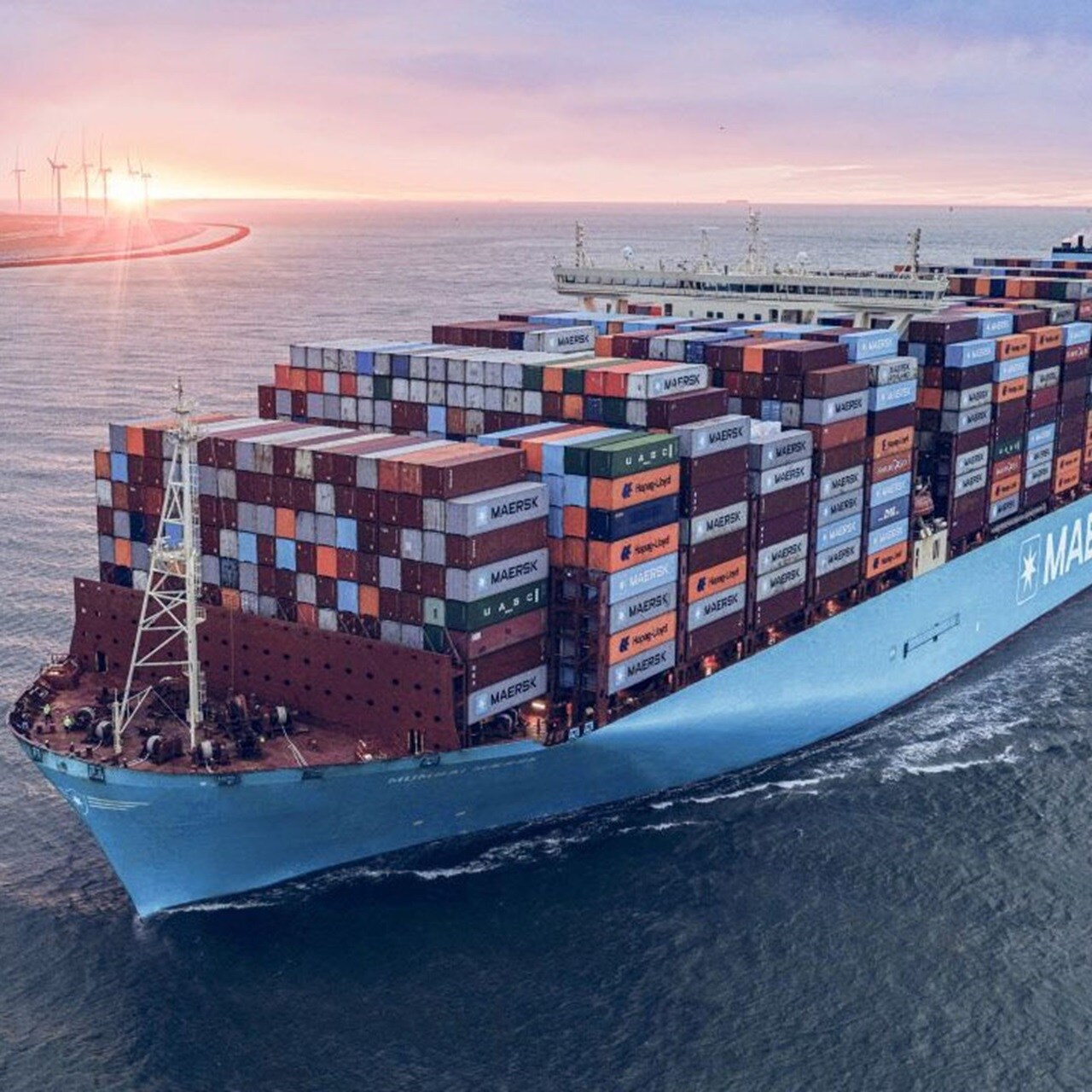
Maersk's climate transition plan
Efficiency measures
- Ocean network efficiency and execution, including our Gemini network and Terminals
- Asset efficiency of our fleet
Energy shifts
- Electrification of our own assets
- Fuel shifts in our fleet
- Energy shifts of business partners, especially in Logistics & Services
Our net zero targets
To catalyse the decarbonisation of global logistics
| Energy Transition | Net zero by 2040 | Net zero by 2040 | Net zero by 2040 |
|---|---|---|---|
|
Energy Transition
Absolute reduction in scope 1 emissions
|
Net zero by 2040
APMM
|
Net zero by 2040
2030*
|
Net zero by 2040
35% reduction
|
|
Energy Transition
Renewable electricity sourcing
|
Net zero by 2040
APMM
|
Net zero by 2040
2030*
|
Net zero by 2040
100% sourced
|
|
Energy Transition
Absolute reduction in scope 3 emissions
|
Net zero by 2040
APMM
|
Net zero by 2040
2030*
|
Net zero by 2040
22% reduction
|
In 2024, Maersk became the first in our industry to set validated GHG emission targets, based on the Science Based Targets initiative’s (SBTi) new Maritime Guidance. Our commitment is to reach net-zero GHG emissions by 2040 from a 2022 base year, with key mid-term targets for 2030. The targets include specific and absolute targets to reduce emissions from Maersk’s own operations and across our supply chains.
Priorities and actions on climate change
To make our decarbonisation commitment a reality, Maersk focuses on providing innovative, low emissions logistics solutions to our customers, building scale and momentum. We invest in low emission fuels and technologies where we see supply chain decarbonisation opportunities such as batteries, electric trucks and barges, network planning software, and information sharing technology. We also work closely with regulators and other stakeholders to build robust policies that support our sector’s energy transition and accelerate and scale decarbonisation efforts.
Explore Maersk’s decarbonisation progress and priorities in our businesses:
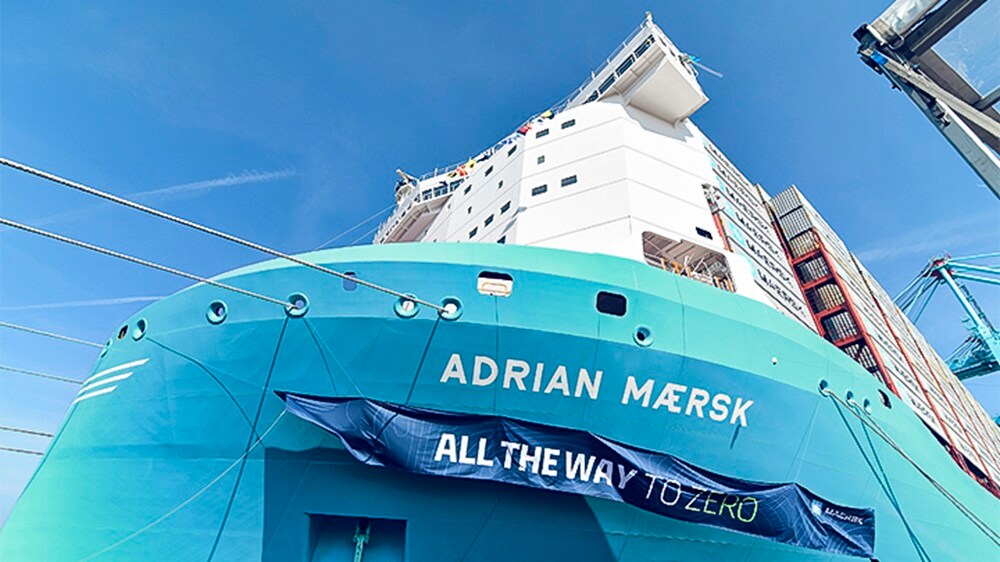
2025 emissions
- Efficiency improvements in Ocean network and assets, including the implementation of the Gemini network, vessel retrofitting and voyage optimization, were not sufficient to offset the need for rerouting vessels around the Cape of Good Hope and increased air cargo transportation emissions.
- Increased sales of marine fuels and containers to third parties and taking delivery of 10 new dual-fuel methanol vessels led to a substantial increase in scope 3 (value chain) emissions.
- On the positive side, network and asset efficiency efforts helped keep 2025 scope 1 emissions consistent with 2024, despite a larger fleet. Scope 2 (purchased energy) emissions fell by 12% for the year due to our energy switch to renewables at sites including Morocco and Bahrain.
The largest opportunity to reduce emissions remains global regulations to close the price gap between traditional fossil fuels and low emission fuels, derisk investments, and allow this nascent market to scale. The energy transition of our industry is a difficult task, and we expect it to continue to be challenging going forward.
Greenhouse gas (GHG) emissions in 2025
Maersk’s GHG emissions footprint 2025 (in 1,000 tonnes CO2e)
| Performance 2025 | Maersk's GHG emissions |
|---|---|
|
Performance 2025
85,449
(2024: 83,528) |
Maersk's GHG emissions
Total GHG emissions*
|
|
Performance 2025
33,953
(2024: 33,939) |
Maersk's GHG emissions
Scope 1 emissions
|
|
Performance 2025
313
(2024: 356) |
Maersk's GHG emissions
Scope 2 emissions
|
|
Performance 2025
51,183
(2024: 49,232) |
Maersk's GHG emissions
Scope 3 emissions
|
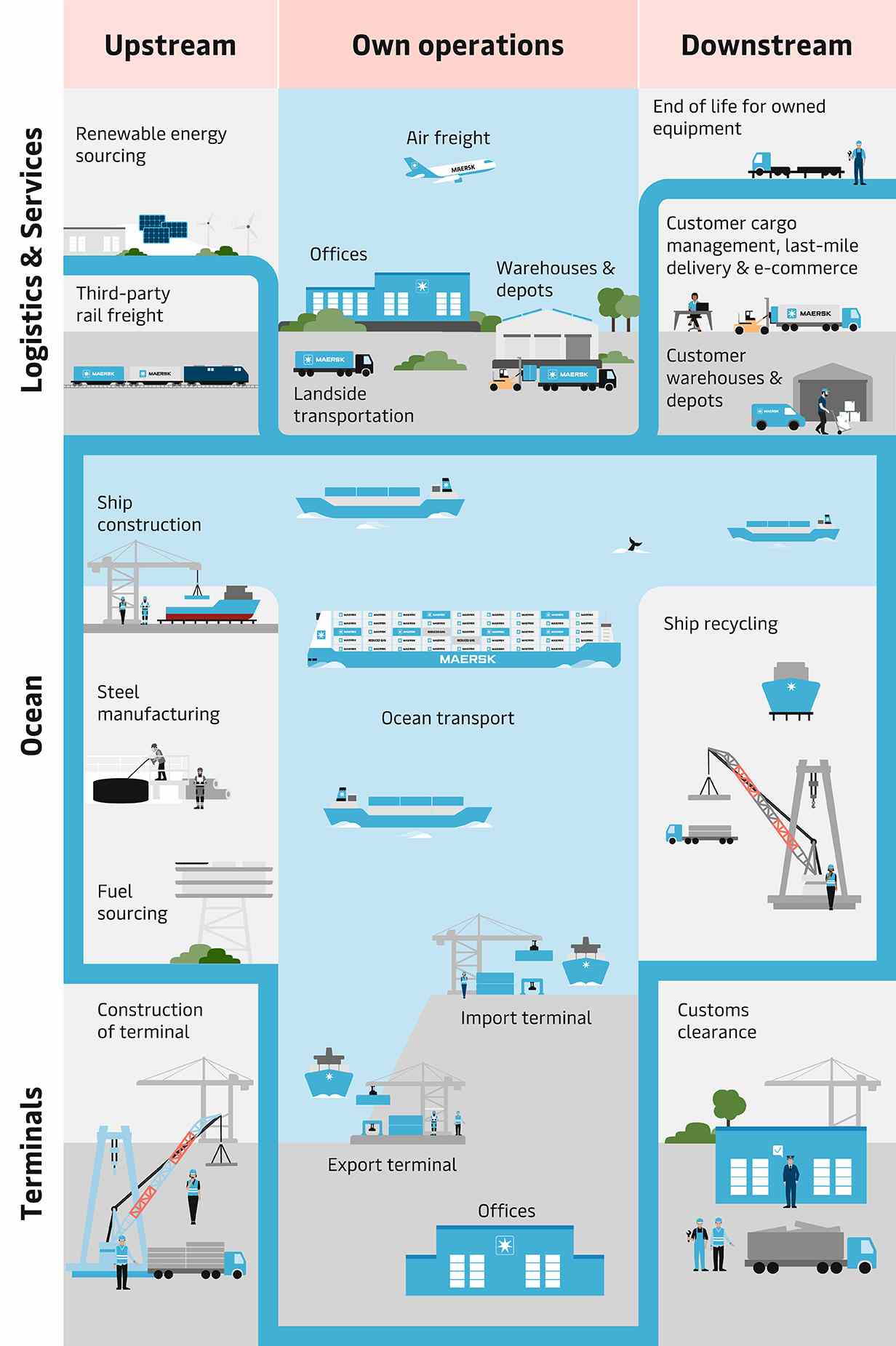
Environmental impacts, risks, and opportunities across Maersk’s value chain
|
Climate change mitigation
Greenhouse gases emitted from our operations, suppliers and business partners in the value chain |
Climate change adaptation
Financial risks due to physical impacts of climate change to assets and operations |
Pollution
Air pollutants from vessels and landside/air transportation |
Ecosystem health and biodiversity
Disturbance of species due to vessel traffic and underwater radiated noise |
Waste management
Waste generation during operations |
Sourcing of critical resource
Environmental impacts resulting from the steel value chain |
|---|---|---|---|---|---|
|
Climate change mitigation
Transition risks related to policies and market demand for decarbonisation of the shipping indust |
|
Pollution
Pollution from hydrocarbon spills from vessels and landside operations and from containers lost at sea |
Ecosystem health and biodiversity
Ecosystem degradation and biodiversity loss caused by land use and habitat disruption resulting from construction of land-based assets |
Responsible ship recycling
Environmental impacts during decommissioning of vessels |
Sourcing of critical resource
Environmental impacts resulting from the fossil fuel and biofuel value chain |
|
Climate change mitigation
Climate advocacy/lobbying for policy interventions on energy transition in shipping and logistics |
|
Pollution
Discharged wastewater to the sea (e.g. scrubber, bilge, sewage and grey water) |
Ecosystem health and biodiversity
Spread of invasive species |
|
|
Learn more
Climate related risks
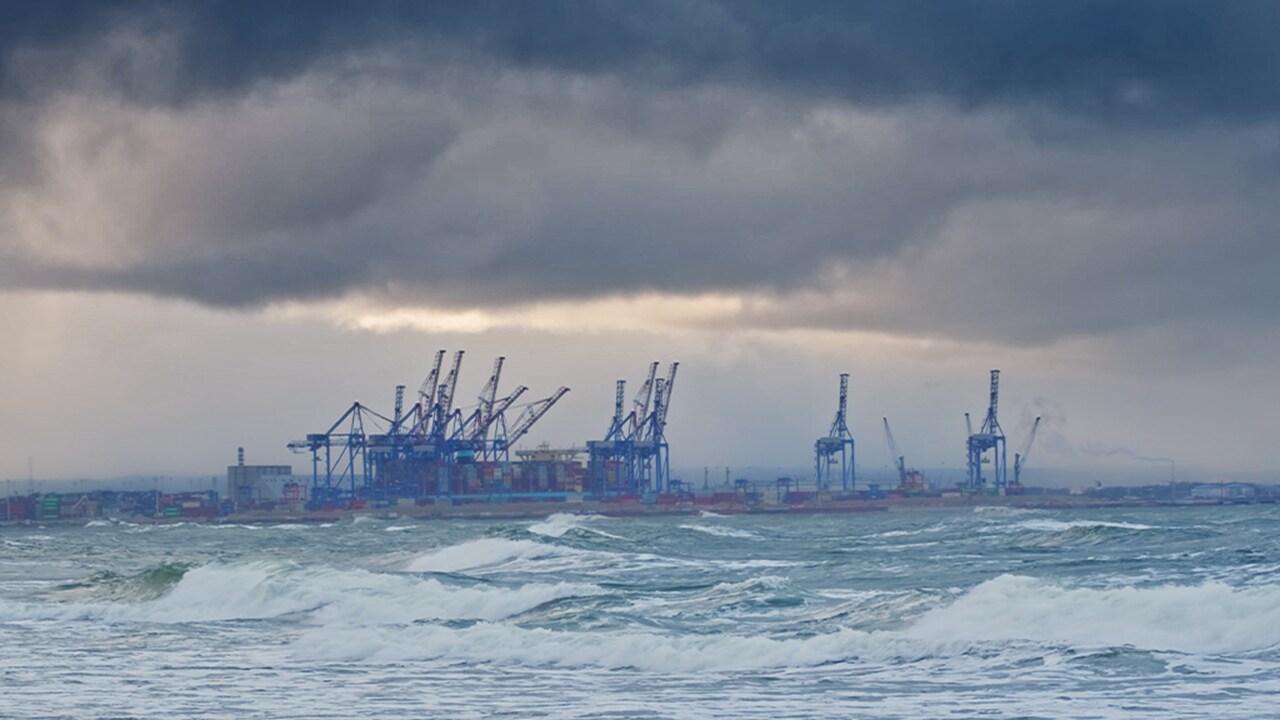
As a global company, many Maersk operations are located in areas with risk exposure to the impacts of climate change. In 2025, Maersk conducted a climate risk assessment to evaluate physical impacts on land-based assets and operations covering more than 1,400 own and third-party assets (terminals, warehouses, offices, and data centers), to identify exposure to hazards such as flooding, storm surge, windstorms, heatwaves, and water stress.
Click here for greater details on our assessment and to see the top five assets with the most significant physical climate risks.
Regulatory drivers
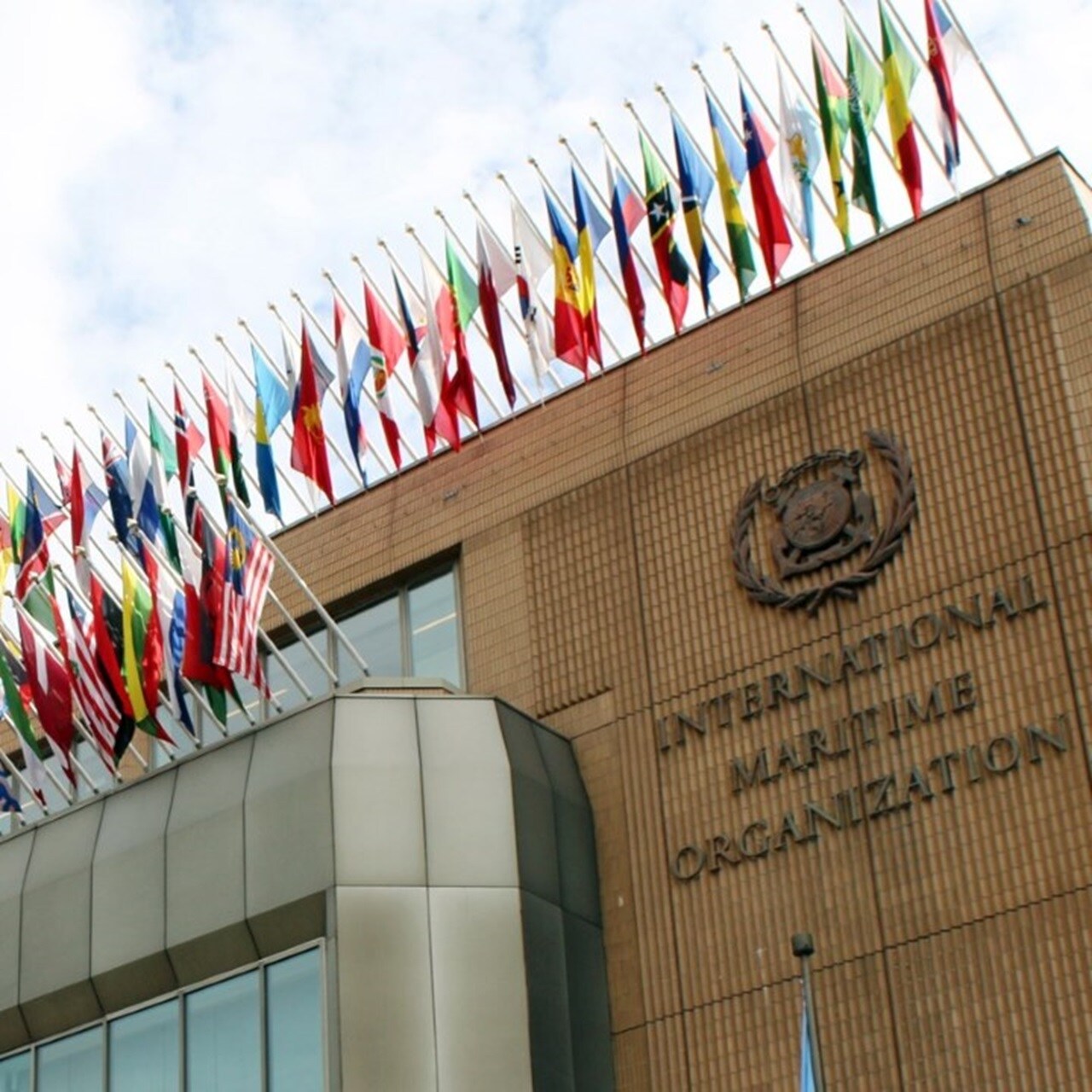
Regulatory debates also continue to impact our sector, as consensus and action on several topics critical to the energy transition remain elusive. While there has been promising regional progress in climate policy, more ambitious and impactful policies are urgently needed at a global level to add scale, derisk investments and avoid a patchwork of local policies which add complexity.
Maersk is committed to conducting all our policy outreach in alignment with the Science-Based Targets initiative (SBTi) goal of limiting global temperature rise to 1.5°C. We actively engage with policymakers and stakeholders to advocate for regulations and policies that support this crucial objective, ensuring our business strategies are in harmony with global mitigation efforts.
Read more about our policies and positions here.
Annual Report 2025
Learn more about sustainability at Maersk




Learn more about Maersk

Careers

Follow us on LinkedIn
