A step ahead: how to spot and adapt to emerging global trade patterns
 LinkedIn
 Facebook
 X.com
X.com
 WeChat
 Email
Email
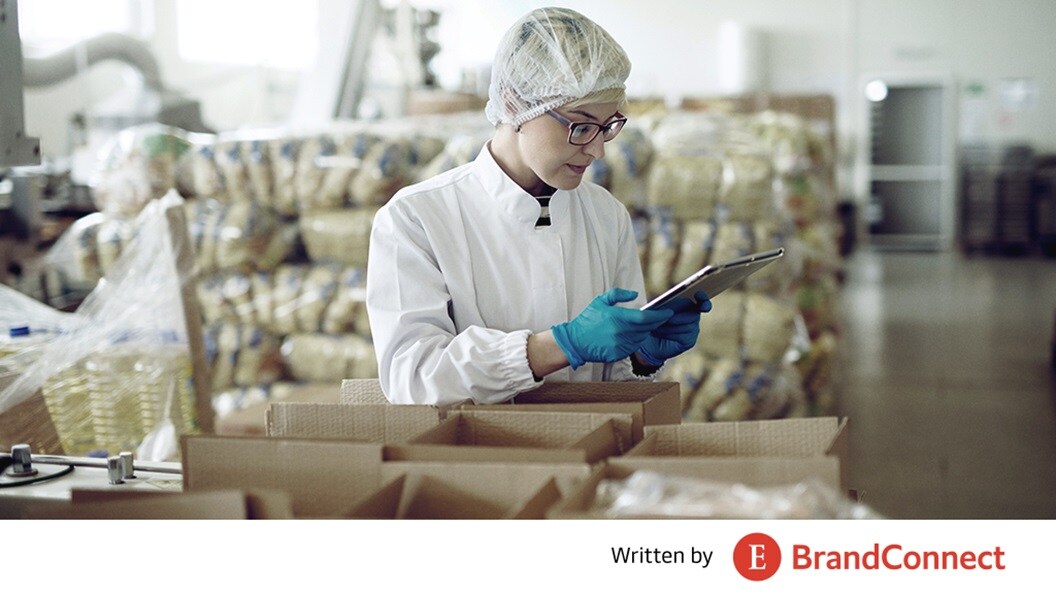
In an era of rising non-tariff protectionism, a changing world order and covid-19, a strategic, adaptive and flexible approach to monitoring emerging global trade patterns is crucial. In this article, we look at potential disruptions and ways fast-moving consumer goods (FMCG) companies can build resilience.
How FMCG leaders can spot and adapt to disruptions in global trade
There are some disruptions that no company can see coming. In the fast-moving consumer goods (FMCG) sector, where demand for fresh food, drink and other vital supplies can fluctuate by the minute, the ability to react instantly is essential. But when covid-19 brought global trade to a near standstill, that need for flexibility was put firmly in the spotlight.
“At the beginning, people stopped buying cars, clothes and so on. The only vertical that kept going was FMCG,” says Paola Navas, FMCG vertical head at Maersk. “People were panic buying, and that meant companies suddenly needed more shipping lines and more space in warehouses.”
With COVID-19, it wasn’t just a spike in demand. It was a step change in customer behaviour.
Typically, global companies may expect disruptions to be localised in one part of the world. That means events such as storms at sea, congestion at ports or new trade restrictions can be managed by shifting parts of the supply chain elsewhere. The global nature of a pandemic means it does not clearly fit that mould. But as Ms Navas points out, the gradual spread of the virus meant disruption “unfolded in stages”, providing precious time for companies to adapt.
Latin America—with its large production capacity, varied climate for growing crops and mature logistics infrastructure—was the last to be affected by the spread of covid-19. “This meant Latin America was producing and shipping while Asia was closed, and that was actually a boost for FMCG in the region,” she says.
Surprisingly, that means the pandemic provides a useful lesson in how to make FMCG supply chains resilient enough to meet surges in consumer demand, yet flexible enough to respond to further upheaval straight away.
Crunching the data
Having the right amount of stock is always a complex challenge for FMCG companies. With food and drink, for example, retailers must have enough supply that shelves are kept full and customers do not turn to a competitor, but not so much that goods risk expiring while sitting in storage.
As a result, when supply chains are under strain, the first step is understanding precisely what stock needs to be supplied where.
In one example, Mondelēz—one of the world’s largest snack suppliers—found that demand for certain chocolate products soared this year while sales of chewing gum fell, as shoppers adapted to working and socialising from home. “With covid-19, it wasn’t just a spike in demand. It was a step change in customer behaviour,” says Sandra MacQuillan, chief supply chain officer at Mondelēz International.
By collecting and responding to data on customer demand, the company was “able to be more predictive about what was happening”, she adds, and could swiftly adapt its supply of products to meet those changing habits.
This lesson is true of other types of supply chain disruption. Rebecca Harding, an independent economist and CEO of trade data analytics company Coriolis Technologies, tells of problems encountered by an unnamed food producer that was shipping yoghurt to India.
Unforeseen bureaucratic changes around warehousing rules resulted in a backlog in processing storage space, and fresh dairy products “were left out on the beach, waiting for a slot”. Perhaps better data on the reliability of the cold chain could have seen that disruption coming.
However, Dr Harding points out that kind of data-driven approach does not come cheap. “Companies need help along the whole supply chain. Even for SMEs, everybody needs to know about everything that’s happening, and there are a lot of hidden costs. It can become difficult.”
Global company, local awareness
According to Ms Navas, that is where the global oversight offered by logistics companies can come into play. In the case of covid-19, she says Maersk was in a position to see how the needs of different verticals were changing in real time.
“FMCG companies wanted cargo to come faster, while other customers wanted the process to slow down because there was no demand,” she says. “Logistics companies had to look at accelerating certain ocean freight while keeping other inventory moving at sea, for weeks or even months, because customers didn’t have capacity to store it.”
We’re seeing customers are actually making decisions locally, looking at their supply chains and seeing they have to procure completely differently in different regions.
Food producers, distributors and retailers can take advantage of those kinds of offerings—without the cost of implementing their own complex and costly data-driven systems—by building a collaborative and flexible working relationship with their logistics providers, which can share some of that load.
“Companies are looking at how to increase their visibility across the supply chain, and that means increasing the collection of data and the use of technological solutions,” Ms Navas says.
For companies that may lack the resources to put those systems in place, Maersk is helping to run improvement projects and workshops with its customers, bringing in engineers and analysts to evaluate possible supply chain inefficiencies.
That also means scrutinising data at a regional level, rather than seeking a one-size-fits-all approach across the globe. A supply chain optimisation project in Latin America may result in very different solutions to a similar project in Europe or Asia, for example.
“We’re seeing customers are actually making decisions locally, looking at their supply chains and seeing they have to procure completely differently in different regions,” Ms Navas says. Ultimately, that means operating “as a global company, but one that thinks locally”.
Disclaimer:
Produced by (E) BrandConnect, a commercial division of The Economist Group, which operates separately from the editorial staffs of The Economist and The Economist Intelligence Unit. Neither (E) BrandConnect nor its affiliates accept any responsibility or liability for reliance by any party on this content.
고객이 필요로 하는 것이라면 무엇이든 도와드립니다

솔루션

문의하기

화물을 운송할 준비가 되셨나요?
I agree to receive logistics related news and marketing updates by email, phone, messaging services (e.g. WhatsApp) and other digital platforms, including but not limited to social media (e.g., LinkedIn) from A. P. Moller-Maersk and its affiliated companies (see latest company overview). I understand that I can opt out of such Maersk communications at any time by clicking the unsubscribe link. To see how we use your personal data, please read our Privacy Notification.
By completing this form, you confirm that you agree to the use of your personal data by Maersk as described in our Privacy Notification.