
 LinkedIn
 Facebook
 X.com
X.com
 WeChat
 Email
Email

The chemicals industry recognises the crucial role it has to play in combatting climate change. In an industry responsible for about 5% of greenhouse gas (GHG) emissions globally, leading companies are exploring a broad range of strategies for reducing their impact. But a study to be published shortly suggests they could be missing an opportunity to make real progress.
FT Longitude and Maersk surveyed 500 chemicals companies worldwide, the data implied that almost two-thirds of the industry’s greenhouse gases (63%) are generated in scope 3. These are emissions not produced by companies themselves, but which they are indirectly responsible for up and down their value chains. It’s a call to action echoed by estimates from the European Chemical Industry Council that as much as 70% of the chemicals sector’s emissions are scope 3.
Nevertheless, the research suggests that only a minority of companies are focused on reducing those scope 3 emissions. Just 29% in the sample are currently making efforts in this area, the research reveals. The vast majority are putting off doing the work they need to do to bring them down.
Time to act
Action on scope 3 emissions makes sense – and not just because they make up such a large chunk of the chemicals industry’s emissions. For one thing, chemicals companies that tackle scope 3 will speed up their progress on reducing their total emissions. Many businesses have now set themselves demanding deadlines on emissions reductions, so speed is important. And then there’s regulation. The regulatory environment is shifting rapidly, and regulators are putting scope 3 emissions under a spotlight. In the European Union, for example, the Corporate Sustainability Reporting Directive, signed off last year and now being transposed into national laws of EU member states, will require 50,000 companies – including chemicals businesses – to report on their climate impacts, including their scope 3 emissions. In the US, proposals from the Securities and Exchange Commission will subject all publicly listed companies to similar rules. Many other countries and territories are following suit.
Logistics is an important source of scope 3 emissions
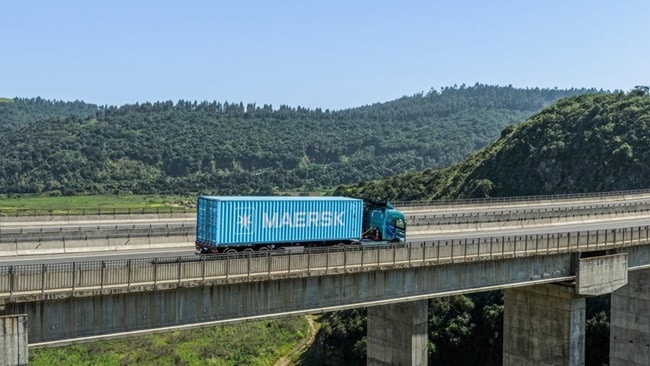
How, then, should a chemicals company tackle its scope 3 emissions? The research suggests an immediate focus should be logistics: While figures may vary considerably, 57% of chemicals companies in the survey say that logistics, transportation, and storage activity is a major contributor to their scope 3 output. But very few have prioritised this area. That means that many companies have yet to capitalise on those relatively straightforward opportunities to cut their GHG emissions, such as shifting to alternative means of transportation. For instance, shipping by sea has been estimated to produce up to 145 times less GHG emissions per tonne of cargo transported one mile than air transportation. Future improvements – vessels powered by new fuels including methanol produced from biomass, biodiesel and ammonia, for instance – will reduce sea transport GHG emissions even more. Another example is warehousing. The availability of warehouse space with a reduced greenhouse gas footprint is growing rapidly and gives chemicals companies another way to reduce their scope 3 emissions.
Targeting logistics’s scope 3 emissions with focus
There is enormous potential to target logistics with more focus – and to have a discernible positive impact on scope 3 emissions as a result. Chemicals businesses rising to this challenge will be able to accelerate the rate at which they reduce their overall GHG emissions.
Logistics services providers, meanwhile, can support the chemicals industry in making those emissions-related improvements. It’s a win-win situation. After all, the chemical industries’ logistics-related scope 3 emissions are our industry’s direct GHG emissions.
Chemicals companies should be ambitious and proactively target logistics. It represents a vital opportunity to reduce GHG emissions – and one of the scope 3 areas where it is possible to get going quickly. As a first step, companies not doing so yet should invite their logistics teams to actively participate in the conversation around decarbonisation, giving them a chance to contribute to the debate and suggest solutions. The justification for focusing on scope 3 emissions grows stronger by the day, and logistics represents an important first step.
Continue reading the second part of this piece on how cutting greenhouse gas emissions can be good for profit.
Discover more logistics opportunity for chemical businesses.

About FT Longitude
FT Longitude is a specialist thought leadership agency, owned by the Financial Times, working with a wide range of the world’s most prestigious B2B brands across Europe, the US and Asia-Pacific. FT Longitude’s 80+ clients are concentrated in the professional services, financial services, and technology sectors, but also stretch into energy, infrastructure, manufacturing and other industries. Headquartered in London, the company was founded in 2011 and was selected as one of Chief Marketer 200, Top Marketing Agencies of 2020, an Inc. 5000 Europe in 2018, an FT 1000 company in 2017, and a 2016 Leap 100 high growth UK company by City A.M. and Mishcon de Reya. It is led by founders Rob Mitchell (CEO), James Watson (COO) and Gareth Lofthouse (Chief Revenue Officer). For more information: visit longitude.ft.com.

Einblicke von einem Branchen-Insider








Möchten Sie über anstehende Branchentrends auf dem Laufenden bleiben?
Sie haben es geschafft, willkommen an Bord!
Es tut uns leid, aber beim Senden Ihrer Kontaktanfrage ist ein Problem aufgetreten.
Bitte überprüfen Sie die Formularfelder und stellen Sie sicher, dass alle erforderlichen Informationen korrekt angegeben sind. Wenn das Problem weiterhin besteht, wenden Sie sich bitte an unser Support-Team, um weitere Hilfe zu erhalten.
Möchten Sie über anstehende Branchentrends auf dem Laufenden bleiben?
Erhalten Sie unsere Einblicke direkt in Ihr Postfach, indem Sie sich über dieses Formular anmelden und in eine Welt voll integrierter Logistik einsteigen. Lassen Sie sich von unserer Auswahl an Artikeln inspirieren, die auf Sie zugeschnitten sind, und erhalten Sie mit wenigen Klicks Wissen über relevante Geschäftseinblicke. Sie können sich jederzeit wieder abmelden.
I agree to receive logistics related news and marketing updates by email, phone, messaging services (e.g. WhatsApp) and other digital platforms, including but not limited to social media (e.g., LinkedIn) from A. P. Moller-Maersk and its affiliated companies (see latest company overview). I understand that I can opt out of such Maersk communications at any time by clicking the unsubscribe link. To see how we use your personal data, please read our Privacy Notification.
By completing this form, you confirm that you agree to the use of your personal data by Maersk as described in our Privacy Notification.