
 LinkedIn
 Facebook
 X.com
X.com
 WeChat
 Email
Email

The global market has witnessed increased demand volatility in recent years. This has forced FMCG businesses to deal with capacity constraints, container shortages, and port congestions in the absence of transparency and predictability in their supply chains.
What are the challenges of the new global market and how do we address them?
- Volatility
- Uncertainty
- Complexity
- Ambiguity
In times like these, FMCG companies are looking to leverage their partnerships with logistics providers and focus on achieving end-to-end visibility.
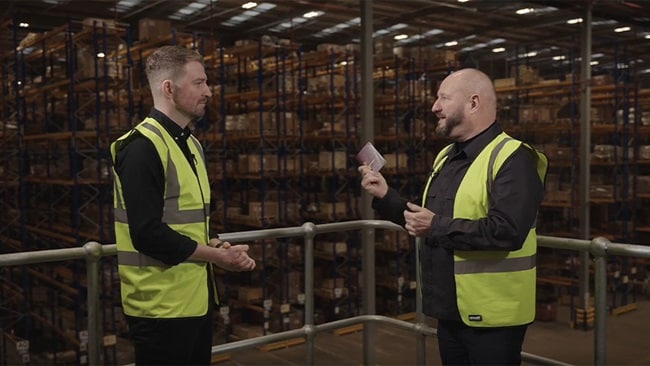
In our roundtable discussion ‘Is full supply chain visibility the future of FMCG businesses?’ moderated by Richard Wilding, Professor of Supply Chain Strategy at Cranfield School of Management, our experts, Lars Schmeltzer, Global Head of Orchestration, Gerard Hazenberg, Europe head of 4PL, and Sherif El Nahass, Head of Global Logistic Procurement at Nestlé, discuss the importance of real-time end-to-end supply chain visibility and the role of technology and innovation in achieving it.
The key highlights
When it comes to FMCG customers, the need of the hour is flexibility. Being able to adapt to changes quickly not only helps mitigate supply chain risks, it also allows businesses to avoid disruptions affecting their end consumers.
To do this, real-time end-to-end visibility is a must. And technology such as predictive analytics and machine learning capabilities aid in continually monitoring the supply chain and taking quick decisions about potential disruptions.
Another important aspect of overcoming supply chain challenges is collaborating with logistics partners, building relationships and managing them in order to work together towards the common goal of having a resilient and agile supply chain.
Watch the video to discover the importance of real-time end-to-end visibility in achieving a flexible FMCG supply chain.
Creating value for the FMCG industry
Unlike in the past, when FMCG companies focused mainly on delivery to stores, supermarkets and wholesalers, today, brands are expected to cater directly to the consumer, often via e-commerce. This calls for a significant revamp of FMCG supply chains, allowing for delivery to local hubs and direct to consumers.
Visibility
Visibility plays a major role in the smooth functioning of today’s supply chains and provides businesses with the control they need to make inventory changes based on demand, deal with transport disruptions and plan alternative modes, and track cargo all the way from the manufacturing unit to the end consumer.
Agility
The past couple of years have shed light on the importance of having a supply chain that is agile enough to deal with disruptions smoothly and quickly by being flexible and responsive. Data-driven knowledge can provide businesses with the direction they require to implement technology to boost agility.
Partnership
FMCG businesses rely on supply chain operations that ensure their products move seamlessly from the factory to the consumer’s door, no matter the disruption, demand fluctuations or global events. To do this, businesses require an integrated logistics partner who can support their operations and help their growth ambitions by providing solutions that give them the tools required.

取得產業內部人士的見解






您是否想隨時獲取未來產業趨勢的必修課?
您完成了,歡迎訂閱!
很抱歉,發送您的聯絡請求時發生問題。
請檢視表單欄位,並確保提供所有必要的正確資訊。若問題仍然存在,請聯絡我們的支援團隊尋求進一步協助。
您是否想隨時獲取未來產業趨勢的必修課?
透過在此表單註冊,您可直接在您的郵箱中接收我們的見解,踏入真正整合物流的世界。只要按幾下,您就可從我們為您量身訂製的文章中獲取靈感,並獲得相關業務見解。您可以隨時取消訂閱。