 LinkedIn
 Facebook
 X.com
X.com
 WeChat
 Email
Email
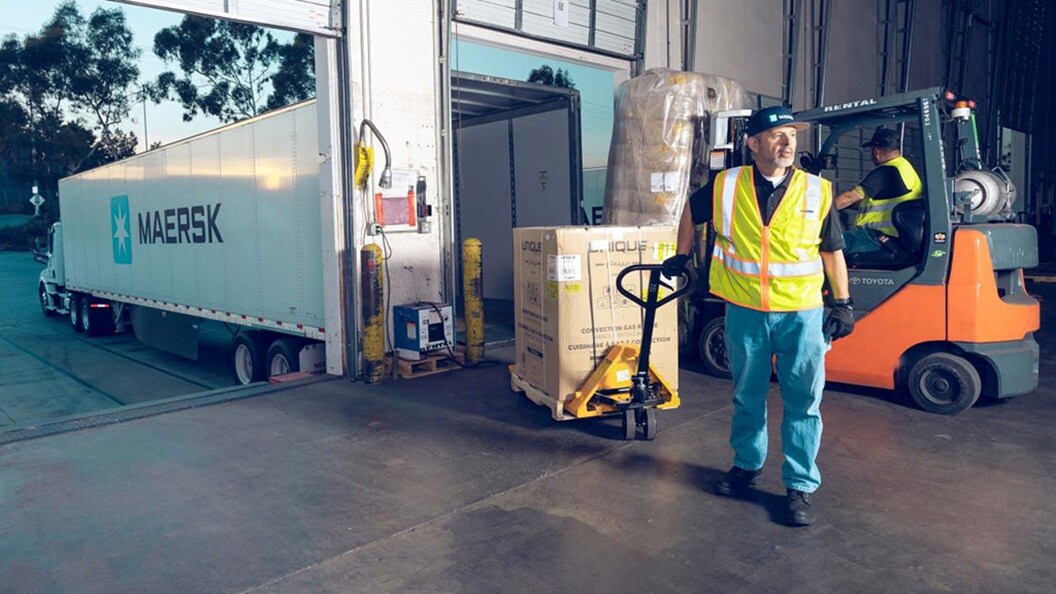
A shipment leaves the warehouse. The driver arrives on time. But the customer called in furious.
Everything looked fine, until it wasn’t. You hit the delivery window. You followed the SOPs. And still, the customer’s angry. Why? Because somewhere in that chain, something broke: An update went missing. A label got swapped. A customer never got the call. And no one saw it happen — because no one owned the middle.
If you’ve had more than one of these issues in the last quarter — missed installation, lost shipment, failed SLA — chances are… it didn’t break in motion, it broke in transition.
This is the part of ground freight no one talks about: the handoff.
Not the first mile. Not the final mile. The messy middle mile — the moments between warehouse and doorstep, planning and execution, accountability and assumption. Between functions, partners, nodes… these handoffs are where risk hides and reliability unravels.
Let’s see this (supply) chain reaction.
The handoff: what it looks like, and where it breaks
A typical specialized ground freight shipment can involve up to 5 handoffs before final delivery:
| Handoff | Typical failure points |
|---|---|
|
Handoff
Warehouse → Terminal
|
Typical failure points
Label error, bad scan, reprints not verified
|
|
Handoff
Terminal → Linehaul
|
Typical failure points
Improper stacking, load mismatch
|
|
Handoff
Linehaul → Sortation
|
Typical failure points
Scan gaps, missed alerts, delay not escalated
|
|
Handoff
Sortation → Last-Mile Crew
|
Typical failure points
White-glove flag missed, wrong gear loaded
|
|
Handoff
Last-Mile Crew → Customer
|
Typical failure points
Late call, setup misfire, no-show or no prep
|
When you have different vendors doing the handoffs, each of these transitions comes with a new team, a new system (or a differently configured one), and a different process expectation. And that’s where things start to go wrong.
Everyone thinks someone else is watching…
You’ve got a label swap at the terminal, and the wrong crew shows up at a medical site for installation. And that’s how the drama starts and that’s how it breaks.
- Planners assume the label is correct, but the warehouse team reprints without revalidating.
- Dispatch thinks the terminal loaded everything, but no one rescanned after shift change.
- Drivers show up with the wrong equipment because no one escalated the white-glove flag.
- CX team finds out about it three days later, when the customer complains.
We’re always the team that gets the call when something fails. But most of the time, we’re not the vendor that caused the issue. The issue happened upstream, in the handoff and we didn’t have a view into it.
And no one knows what actually happened because visibility lapsed between steps. Every failure above? These aren’t service issues. These are system issues.
The problem: fragmentation of ground freight operations
In complex freight categories like Specialized LTL and Heavy-Bulky Delivery Services, the root cause of late deliveries, damaged goods, or frustrated customers is often a handoff that wasn’t handled right. And handoffs are rarely just that. They’re a test of your system’s integration. And here’s the problem:
- Warehouse, middle-mile, and delivery teams use disconnected SOPs.
- Visibility drops as the shipment moves across different systems.
- And when something goes wrong… no one owns the full picture.
You’re dealing with X company for warehousing, Y for transport, Z for final mile and trying to stitch together truth from three different systems. Even if the goods move, the data rarely does.
Most failures in ground freight start with the lack of integration between nodes. Because most networks weren’t built to move as one flow. They were built in parts, in silos — warehouse systems, sortation facilities, middle-mile fleets, and last-mile providers all running their own ops, their own tech, and their own version of the truth.
So when something goes wrong — a missing barcode, a damaged unit, or a no-show crew — it’s nobody’s fault. And everybody’s problem.
The stakes: why specialized LTL requires integration for drama-free deliveries
In high-complexity segments, like Specialized LTL or Heavy-Bulky Delivery Services, broken handoffs aren’t just logistical chokepoints. They cause problems far beyond just a delayed shipment. Because these shipments:
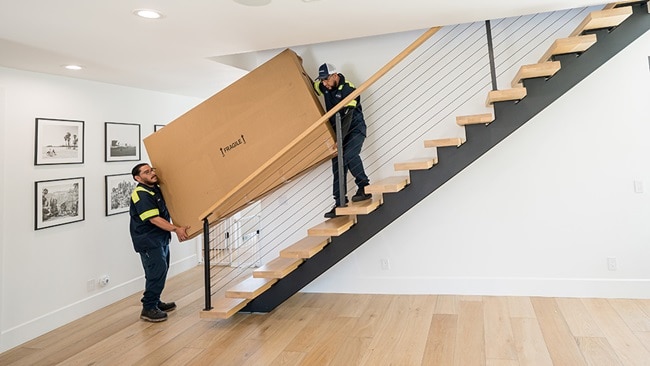
- Are bulky and difficult to handle, needing specialized gear and multiple handlers
- Are fragile or high-value, with little margin for error and high cost if damaged
- Involve multiple stops before final delivery, across different teams and systems
- Require customer-facing pre-assembly, setup, or white-glove handling
- Leave no room for do-overs, one missed flag means rework, penalties, or lost trust
If a 800-lbs treadmill is tilted on the truck, your second man doesn’t show up, and you ask the customer to help carry it inside… that’s the experience the customer remembers, not the shipment time.
We need to be able to perform at each level — timely fulfillment, timely dray, timely delivery. If even one leg of the journey breaks, the whole promise breaks.
The cost isn’t just a re-delivery. It’s a missed install, a service-level agreement (SLA) violation, or a lost customer. And yet, most networks treat these like generic freight. So, how do you fix something you can’t see until it breaks?
The solution: what ground freight integration looks like
Ground freight moves across more hands, more systems, and more expectations than almost any other mode. If your network isn’t integrated across those dimensions, you’re simply hoping that everything goes right at every turn. But that’s not how it works.
Here’s what real integration in ground freight looks like:
- System-to-system coordination: Warehouse, linehaul, and delivery nodes use shared systems, processes, and logic. SOPs are consistent throughout, with clear role definitions. Each touchpoint feeds into the next without any gaps or blind spots.
A good, drama-free delivery isn’t just about showing up. It’s about showing up with the right equipment, the right team, and the right prep… so the customer isn’t left guessing or helping.
- Live, layered visibility: Freight moves with a centralized, coordinated view from origin to doorstep. This includes photo scans, milestone updates, live driver movements, regular updates, and exception alerts sent to retail and shipper teams, when required.
You can stitch data from platforms all day. But, unless you act on it fast, it doesn’t help. Real integration isn’t just visibility. It’s the speed of coordination.
- People and process alignment: Every team knows what is expected and who is accountable. Handoffs are validated. And when risk shows up, it’s flagged upstream. Escalations are owned and acted upon.
What we’ve done really well is bring it all into one playbook. If someone in depot ops sees a delay or risk, the last-mile team hears about it before it becomes a customer issue.
What real integration means in ground freight operations
| Dimension | What it looks like |
|---|---|
|
Dimension
Systems
|
What it looks like
Every node (warehouse, linehaul, delivery) operates on shared SOPs and scan logic.
|
|
Dimension
People
|
What it looks like
Depot managers, planners, and ops leads are in daily sync, running the same play.
|
|
Dimension
Escalation
|
What it looks like
There’s no “support ticket”. There’s a response protocol, with real humans acting fast.
|
|
Dimension
Accountability
|
What it looks like
Every handoff has an owner who is responsible for resolving it. Not a shared inbox.
|
|
Dimension
Visibility
|
What it looks like
Live milestone updates, driver location, and photo confirmations flow into one dashboard — shared across Maersk, shippers, and customers
|
The question: are your handoffs actually connected?
Every supply chain has handoffs. But what matters is how well those transitions are designed, coordinated, and executed. Because integration isn’t about software. It’s about systemic coordination across people, process, and technology — in one seamless, synchronized move.
Where It Breaks. How to Keep It Drama-Free.
| 3 signs your handoffs are failing | 3 fixes that actually work | What it means for you? | Example of what it can look like |
|---|---|---|---|
|
3 signs your handoffs are failing
You lose shipment visibility between nodes.
|
3 fixes that actually work
Shared SOPs across warehouse, middle-mile, and final-mile.
|
What it means for you?
One set of rules for scanning, labeling, and escalation triggers across all nodes. No room for interpretation.
|
Example of what it can look like
If the warehouse reprints a label, the new code is auto-synced into the delivery crew’s handheld.
|
|
3 signs your handoffs are failing
Your delivery teams don’t get full context or prep.
|
3 fixes that actually work
Real-time milestone tracking + shared dashboards.
|
What it means for you?
Every team sees the same live updates: photo proof, ETA, exception alerts — all on one view.
|
Example of what it can look like
The dashboard flags a missed scan at sortation, giving ops time to fix before it hits the customer.
|
|
3 signs your handoffs are failing
Your CX team finds out after the customer does.
|
3 fixes that actually work
Escalation protocols that involve humans, not ticket threads.
|
What it means for you?
Issues get flagged, owned, and solved before the failure hits the customer.
|
Example of what it can look like
A flagged “2-man crew short” is rerouted within 15 minutes; the customer never knows there was a risk.
|
If you think about the word ‘chain’ in supply chain, it’s really how it works. Each link is only as strong as the one before it. That’s how chains, and freight, actually break. Or work.
To spot where handoffs are hurting your operation, start here:
- Do your freight teams work off the same tools and timelines?
- When the shipment leaves the warehouse, do you lose visibility?
- Can your current provider prove performance metrics, not just promise it?
- Can your partner tell what happened at the last handoff, and how the next one will go?
- If something goes wrong mid-transit, how do you find out? And how soon?
Because in ground freight, you’re only as reliable as the mile between the miles. That’s why we’ve built around node-to-node coordination, not just point-to-point shipping. At Maersk, we connect terminals, warehouses, systems, and teams — offering an integrated logistics solution for your ground freight needs. Explore how we can help you connect the middle mile.
Interested in specialized LTL services in North America? We deliver the extra care that transforms your one-time buyers into repeat customers. Contact us to get tailored advice that best suits your business.