 LinkedIn
 Facebook
 X.com
X.com
 WeChat
 Email
Email

In ground freight, white glove service sounds like a luxury. But in practice, it’s often a mess of assumptions. Everyone — from retailers to delivery partners — has a different idea of what it means. Full install? Debris removal? Haul-away? Scheduled call 30 minutes out? Shoe covers? There’s no universal definition for the white glove service. And when expectations are unclear, the experience gets shaky, or worse, inconsistent. That’s a problem for the logistics partner, the brand, the retailer, and the person receiving the delivery.
Because premium delivery without premium clarity doesn’t feel premium at all.
Up ahead, we unpack the white glove delivery experience — not as a product off the shelf, but as a service promise. Let’s explore the real structure behind “white glove” done right.
Same phrase. Three interpretations. Zero alignment.
Everyone says “white glove”. But everyone hears something different. Let’s map the divergence.
| Who | What they think it means | What it often turns into |
|---|---|---|
|
Who
Customer
|
What they think it means
“They’ll bring it in, set it up, clean it up. Maybe even show me how.”
|
What it often turns into
The crew shows up late, drops the box inside the door. No install, no heads-up.
|
|
Who
Retailer or Brand
|
What they think it means
“A premium, hassle-free experience that protects our reputation.”
|
What it often turns into
Inconsistent execution leads to returns, complaints, and customer satisfaction score (CSAT) drops. The brand takes the blame for it.
|
|
Who
Delivery Provider
|
What they think it means
“Basic final-mile + add-ons — if we get clear instructions in time.”
|
What it often turns into
Left guessing what’s expected. No shared definition, just assumptions. Leads to ad hoc decisions with service gaps.
|
And here’s the catch… None of those definitions (or expectations) is wrong. Because there’s no single checklist for a white glove delivery. The challenge? Most white glove service offerings are sold without a fixed definition. And so the service delivered often doesn’t match the service promised or expected.
The breakdown happens at the definition stage
When expectations are vague, the entire chain suffers. Retailers sell it as ‘premium’. Customers expect it to feel personal. Carriers interpret it as operational. And delivery crews are left guessing what this specific “white glove” moment requires. Because there’s no single SOP. No shared definition. Just a loosely understood but disconnected idea of “doing more”.
That disconnect can’t be patched with “we’ll make it right” emails. It starts with service definition — not just on what white-glove includes, but on how it’s scoped, confirmed, and communicated.
In that gap between expectation and execution, the experience breaks.
So, what is white glove delivery service really?
White glove is a set of scoped services, designed to meet a higher standard in ground freight delivery. It is tailored to what the customer needs, what the retailer sells, and what the moment demands. That flexibility is the strength of the model.
When white glove works, it’s because three things are aligned and defined:
- A clearly scoped service promise that defines what white glove means for this brand, this product, and this delivery.
- Aligned handoffs across the chain from sales to warehouse to dispatch to final-mile team, so everyone knows what to prep, bring, and deliver.
- Customer readiness is essential because premium service requires the customer to be prepared, with a clear path, availability, and set expectations.
This is what makes the white glove service feel premium
Premium doesn’t mean fancy. It means frictionless. It means complete. And it means intentional. At Maersk, we’ve learned that delivering “premium” white glove service consistently comes down to three things:
- Preparation: The crew is familiar with the product. They know what was promised. They’ve reviewed the delivery notes. They show up with the right gear, right instructions, and right expectations.
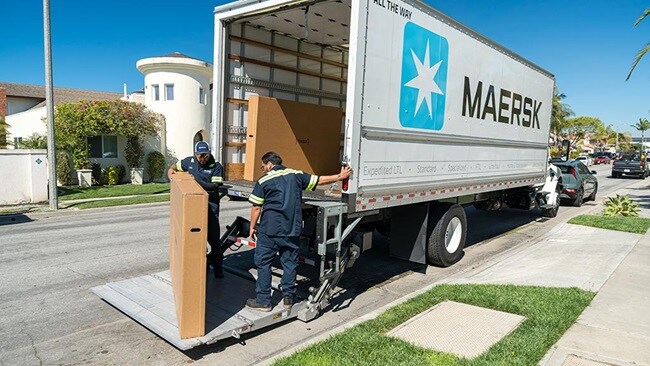
- Presence: It’s not rushed. It’s not transactional. The crew respects the home, communicates clearly, and takes time to do things right — from placement to packaging removal.
- Post-Care: It doesn’t end with the signature. It ends when the customer feels complete. That might mean walking them through basic use, or making sure all materials are cleared, or simply leaving behind a clean space and a confident smile.
A premium service is only premium if it meets or exceeds expectations. And that means defining the ‘premium’ white glove service not just in terms of features, but in terms of fit.
- Was this the right level of service for this product?
- Was it the right scope for this customer segment?
- Did the crew have what they needed to deliver it properly?
Because premium doesn’t mean it has to include everything. It means it needs to include everything the customer was told it would.
The white-glove standard isn’t a checklist, but a system
White glove isn’t just about what happens at the door. It starts way before that — with how it’s defined and how the team is set up to deliver it. If the preparation is off, the promise breaks. But when everyone’s aligned, it works exactly the way the customer imagined it.
White glove doesn’t need one fixed global definition. But it does need defined standards — at the brand, product, and partner level. Standards that can flex to fit different SKUs, different customer tiers, and different delivery partners, without leaving the promise up for interpretation.
At Maersk, white glove services are built in partnership with the retailer. This usually includes:
- Retailer-level configuration, so we know exactly what was sold.
- Onboarding and SOP walkthroughs, with delivery teams and installers.
- Final-mile crew training, for both technical tasks and CX skills.
- Exception handling protocols, for what happens when something breaks down.
- Feedback loops, so insights from the field actually inform future service.
The result? A drama-free delivery experience that’s not only premium, but predictable — for the customer, the retailer, and the logistics partner. And that’s what makes it repeatable at scale.
We’ve built white glove delivery programs from the ground up — with SOPs, with training, and with escalation paths. It’s not ‘just a delivery’. It’s a drama-free delivery… a whole service framework that adapts by product and client, but still holds the same expectations across the board.
White glove delivery experience is a brand handshake
In ground freight delivery, especially heavy-bulky delivery service, white-glove delivery is the closest your customer will get to your brand.
When it works? It’s seamless. Smooth. Unremarkable in the best way. The customer doesn’t rave. They just smile, sign, and move on with their day. No questions. No friction. No unmet expectations. That’s the real win.
But when it fails? It’s loud. It becomes a refund. A complaint. A social post. A call to the brand. A lost customer. Because white glove service failure doesn’t just reflect on the carrier. It reflects on the retailer and the brand promise that just broke.
We’re not just delivering goods… we’re stepping into people’s homes. If that moment feels messy or misaligned, it reflects on the brand we’re representing, not just the carrier. And that’s the risk when expectations aren’t clearly defined upfront.