
 LinkedIn
 Facebook
 X.com
X.com
 WeChat
 Email
Email
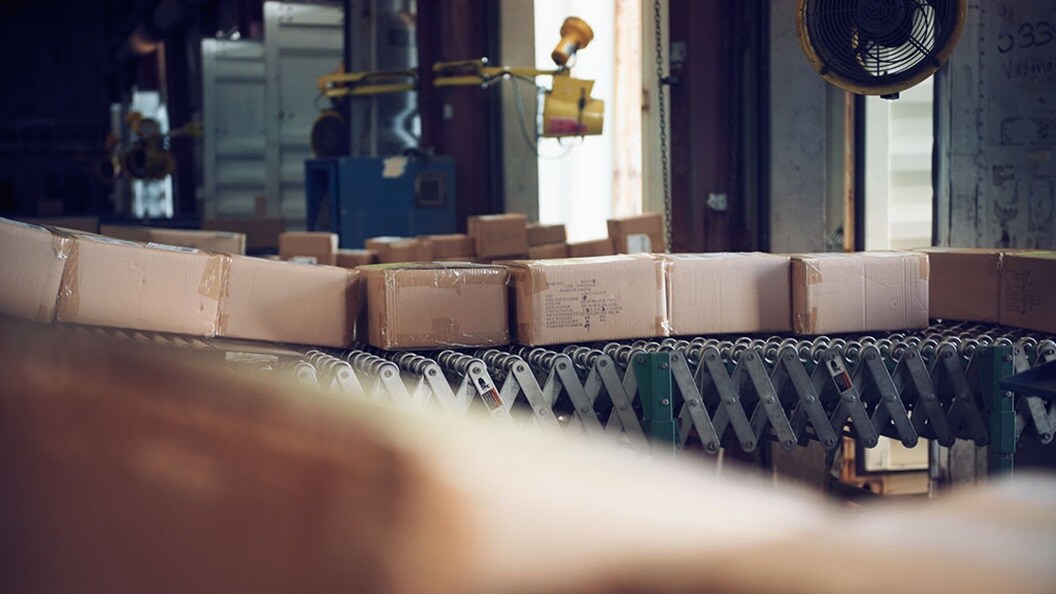
Affected by pandemics, wars, and the impacts of climate change our globalised world is more unstable than ever. These unpredictable factors make it easy to see how often disruptions and delays can take place within the complex system of the global movement of goods.
The Importance of Visibility in FMCG Supply Chains
Supply chains are strings of potential obstructions – each linking point in the system an opportunity for a bottleneck or a delay. Fast-moving consumer goods (FMCG) companies are intricately intertwined within a far-reaching global system of production and distribution. Thus, FMCGs (Fast Moving Consumer Goods) are more likely for their supply chain links to be affected by disruptions stemming from political or environmental unrest.
In particular, FMCG companies with overly complex supply chains struggle with these volatile conditions. When each link in the FMCG company's supply chain is managed by a different supplier this can lead to greater possible risks throughout the sourcing, manufacturing, warehousing, and shipping process – and less visibility in every step of the way.
Paradoxically, the increased risks to FMCG supply chains means excellent visibility is extremely important to these companies. Gunnar Pflanz, Global Vertical Excellence Manager FMCG at A.P. Moller – Maersk explains his perspective saying, "having really complex organizational structures within FMCG companies, also related to mergers, acquisitions, brand strategies, and global presence; is actually limiting current the possibilities to have global visibility." This lack of visibility is a real issue for FMCG companies whose success hinges on flexibility and reliability, and a radical change is needed to mitigate risk.
Reducing Links in the Supply Chain
Gunnar Pflanz explains that reducing complexity is, in turn, an investment in supply chain simplicity. This investment in simplicity leads to greater end-to-end visibility, allowing FMCG companies to react more quickly and become more agile when these disruptions take place, solving problems before they occur.
While FMCG companies used to prioritise a multitude of logistics providers to get their goods from production to retail – they have found that these complex supply chain systems hinder their ability to deliver in a timely and predictable fashion. Thus, an obvious solution for FMCGs (Fast Moving Consumer Goods) looking to simplify is to eliminate excess providers within their supply chain.
However, with less stakeholders to supervise, companies still must wade through the difficulties in managing disparate data systems and a lack of communication between providers. Thus, FMCG companies have found that partnering with an integrated logistics provider can best ease these pain points in the links of their supply chains.


取得產業內部人士的見解
Partnering with an Integrated Logistics Provider
Unstable global conditions mean that we are increasingly seeing FMCG companies trade out complex supply chains for more simple structures, with those relying on integrated logistics seeing payoffs in terms of visibility, predictability, and agility. Pflanz explains, "to get to a place where FMCG companies have higher end-to-end visibility and are more agile they need to look into transforming their supply chain to become easier to manoeuvre. One option is obviously a reduction in the number of providers. But another option is an integrated logistics provider that can serve as an integrating layer between services."
Not only can an integrated logistics partner provide end-to-end solutions – but they can also work with companies' existing providers to streamline communication processes, manage data systems, increase digitisation, and ultimately provide visibility throughout the entire supply chain.
Integrated Logistics: Reduce Risk for FMCG Companies
Moving FMCG goods with greater flexibility and responsiveness to global disruptions means reducing complexities within supply chains. Though eliminating excess providers to favour simplicity is one option, companies may still see issues in communication between disparate and siloed suppliers.
By working in partnership with an integrated logistics provider FMCG companies will benefit from the greatest possible end-to-end visibility, allowing for increased agility when global issues inevitably arise.




您是否想隨時獲取未來產業趨勢的必修課?
您完成了,歡迎訂閱!
很抱歉,發送您的聯絡請求時發生問題。
請檢視表單欄位,並確保提供所有必要的正確資訊。若問題仍然存在,請聯絡我們的支援團隊尋求進一步協助。
您是否想隨時獲取未來產業趨勢的必修課?
透過在此表單註冊,您可直接在您的郵箱中接收我們的見解,踏入真正整合物流的世界。只要按幾下,您就可從我們為您量身訂製的文章中獲取靈感,並獲得相關業務見解。您可以隨時取消訂閱。