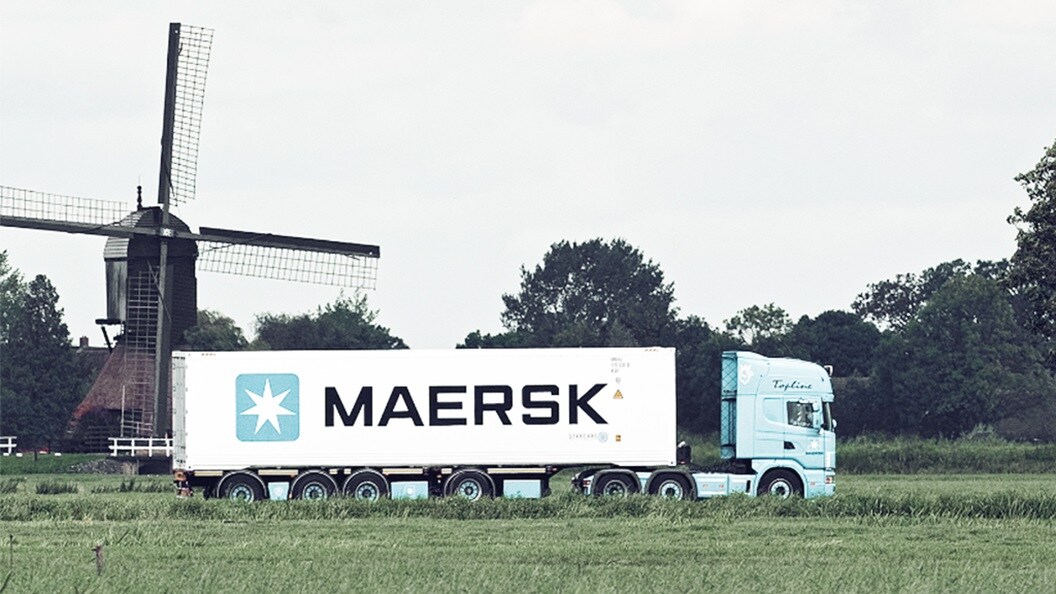
In today’s global marketplace, consumers have grown accustomed to the convenience of getting everything instantly. As a result, businesses face mounting pressure to meet customer demands for faster delivery at a lower cost and enhanced resilience to disruption, all the while having to rethink their decarbonisation practices.

While many companies think of fulfillment, ground transportation, and parcel delivery as the first checkpoint in building supply chain resilience, looking upstream in their supply chain toward seamless connectivity of their ocean and intermodal transportation is equally important. Connecting ocean to land should be the first thing logistics professionals look at to add more resilience and agility to their supply chain.

Why is intermodal transportation so important?

It is estimated that 95% of the world’s manufactured goods undergo intermodal transportation before reaching the end customer. Intermodal can be defined as your container rail and drayage transportation once discharged from an ocean port of call. As reported by Mordor Intelligence, the intermodal market is projected to grow at an annual rate of 8.27% by 2029, with North America holding the largest share of that growth. There are compelling reasons why this space is vital to monitor. 

In this overview, we will explore the four key levers customers should consider in shaping their intermodal strategy in North America, effectively adding more resilience and agility to their supply chain:

Visibility

Reliability and visibility are indispensable factors in modern supply chains

“Visibility goes hand in hand with reliability and is a central concern for businesses – you need both to manage your global supply chain successfully,” said Art Singarajah, Maersk’s Regional Head of First Mile and LCL for North America. Collaborating with a partner that can provide operational excellence in their intermodal services and end-to-end integrated solutions downstream and upstream with an owned asset model will enable enhanced flexibility and control of your supply chain. When all interconnected parts are in place, you can rely on continued operational consistency even when faced with disruptions. Your partner should be able to maneuver these challenges seamlessly and overcome any visibility gaps. They should also be able to facilitate seamless data sharing and real-time cargo tracking.
Smarter operations

Coverage and operational control

Are critical aspects that businesses can achieve with the right logistic partner overseeing the transition from ocean to inland transportation. Across various industries, businesses greatly benefit from this agility. Take the example of a retail business that relies on a continuous flow of goods. By combining ocean and inland transportation, the company can easily collaborate with a single partner to swiftly switch to alternative and/or faster transportation modes in the event of a disruption. This ensures that timelines remain unaffected and end-consumers’ needs are met as planned. “The ability to swiftly respond in the face of disruptions is a key advantage of a provider that has a global reach with local coverage that is built on the back of an owned asset model,” said Singarajah. This flexibility empowers businesses with optionality to make decisions that align their business requirements with that of their customer promise.
Save on costs pictogram

Cost competitiveness

Is crucial in logistics, as long as it doesn't come at the cost-of-service quality. According to the American Transportation Research Institute, transportation expenses account for 66% of overall logistics expenditures. Cost optimization isn't always about finding the lowest-cost carrier. Route optimization, speed, mode of transport, and the integration of multiple products can all offer significant cost savings. For instance, acquiring your intermodal transport directly from your ocean carrier as a bundled solution can help trim costs in the form of reduced demurrage and detention exposure or lower procured chassis fees. Supply chain health checks are a good way for your logistics partner to help you uncover these opportunities.

Greenhouse gas (GHG) emissions reductions
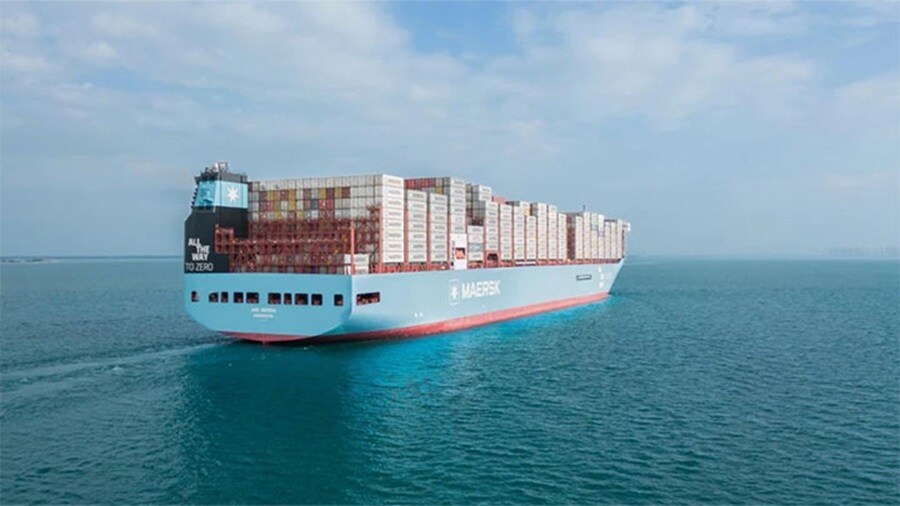
Have emerged as a critical focal point for businesses integrating intermodal solutions into their supply chains. According to the CDP Global Supply Chain Report 2020, organizations' supply chain GHG emissions are, on average, 11.4 times higher than operational GHG emissions, accounting for approximately 92% of an organization's total GHG emissions. This growing awareness of GHG emissions and related climate effects has led both businesses and consumers to demand transportation options with lower GHG emissions, emphasizing the need to integrate decarbonisation practices into supply chain operations for long-term value creation. Singarajah emphasized, "Collaboration plays a pivotal role in achieving ambitious decarbonisation goals within the industry.” Maersk's aim to achieve net zero GHG emissions by 2040 cannot be achieved without joint partnerships with their customers. Our customers’ increasing requirements for end-to-end logistics solutions, and the need for decarbonising supply chains, make our logistics and services value chain GHG emissions a priority. Our actions in this area focus on inland transportation, contract logistics and cold chains, and air freight. Furthermore, exploring alternative fuels and technologies such as biofuels and battery-powered electric trucks in partnership with customers underscores a collective effort to reduce GHG emissions and embrace forward-looking practices in the realm of intermodal transportation.

intermodal

The bottom line

Looking at ocean and inland transportation together offers businesses many benefits and opportunities to improve their agility and resilience. The most significant four levers include increasing visibility and reliability through data, partnering with a logistics company that has the right coverage and operational control, offering cost-competitive value propositions, and doing so while helping decarbonise their customers’ supply chains. In this context, intermodal transportation becomes an integral part of a broader strategy where businesses can optimize operations, adapt to changing circumstances, and align their practices with efficient supply chain management principles.

eブックをダウンロード

車両コンテナ輸送の詳細と、エンドツーエンドのサービスをご利用いただくことで、どのようなメリットがあるかをご覧になりたいですか?以下のフォームにご記入ください。担当者よりご連絡させていただきます。

ご連絡ありがとうございます!

担当者よりご連絡させていただきます。

マースクを初めてご利用になる場合は、まずお客様の情報を確認するためのメールをお送りしますので、ご了承ください。

当社の製品やサービスへのアクセスを簡単にしたい場合は、こちらからアカウントを作成することもできます。

始める

申し訳ございません。お客様のお問い合わせの送信中にエラーが発生しました。

フォームの入力内容について、必要な情報がすべて正しく入力されていることをご確認ください。問題が解決しない場合は、サポートチームにご連絡ください。

eブックをダウンロード

車両コンテナ輸送の詳細と、エンドツーエンドのサービスをご利用いただくことで、どのようなメリットがあるかをご覧になりたいですか?以下のフォームにご記入ください。担当者よりご連絡させていただきます。

このフォームに記入することにより、お客様はマースクによる個人情報の使用(プライバシー通知)に同意したものとみなされます。

あらゆるニーズにお応えします

ソリューション

ソリューション

サプライチェーン全体でお客様のニーズにお応えします。
お問い合わせ先

お問い合わせ先

専従のエキスパートチームがお客様をサポートします。
運賃のお見積もり

船積み手配をご希望ですか?

海上および内陸輸送の運賃を調べることができます。
最新の情報を受け取る
登録してニュースやインサイトを受け取る
最新のサプライチェーン動向をメールで受け取り、トレンドを先取り

I agree to receive logistics related news and marketing updates by email, phone, messaging services (e.g. WhatsApp) and other digital platforms, including but not limited to social media (e.g., LinkedIn) from A. P. Moller-Maersk and its affiliated companies (see latest company overview). I understand that I can opt out of such Maersk communications at any time by clicking the unsubscribe link. To see how we use your personal data, please read our Privacy Notification.

By completing this form, you confirm that you agree to the use of your personal data by Maersk as described in our Privacy Notification.

お申込みいただきありがとうございます。
ニュースレター配信の申し込みを承りました。間もなくニュースレターの設定方法を記載した電子メールが届きます。
購読済み
配信はいつでも停止できます。