
 LinkedIn
 Facebook
 X.com
X.com
 WeChat
 Email
Email

Over six months have passed since the Red Sea tensions began, and the ripple effects on maritime shipping and global supply chains have intensified. Ships continue to be temporarily diverted around the Cape of Good Hope, significantly increasing transit times and operational costs. Regular service reconfigurations and volume changes have put pressure on infrastructure, contributing to port congestion, delays, and capacity and equipment shortages. At the same time, demand for container shipping has remained strong.
The latest of the Beyond the Box podcast looks at the global effects of the Red Sea shipping disruptions. In this article, you can learn more about the repercussions and what they mean for businesses and consumers around the world.
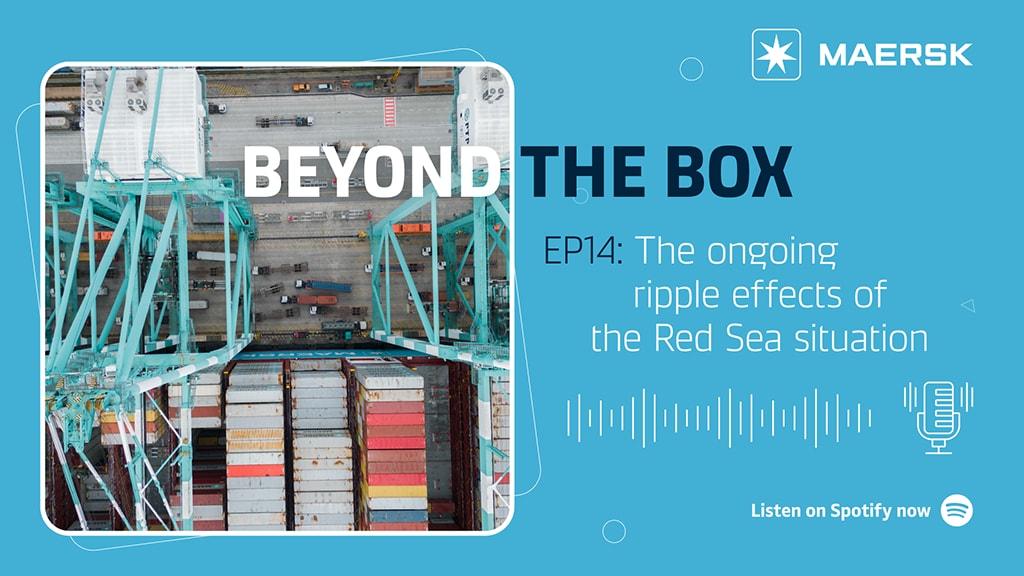
The fallout of the Red Sea tensions
Before the attacks began towards the end of 2023, 12% of global trade passed through the Suez Canal. Recent figures show that the number of ships crossing through the canal has plummeted by 66% since carriers began temporarily diverting their vessels around Africa.
“In today's shipping, anybody who shoots at a ship is shooting at the world,” Jan Hoffman, Head of Trade Logistics at United Nations Conference on Trade and Development (UNCTAD) told Beyond the Box. “The situation continues. The spare capacity has been eaten up. And all routes are affected, not only the ones going through the West, unfortunately.”
The situation has caused many challenges, including:


The effects of the Red Sea shipping situation has extended well beyond the region and created significant disruptions in the flow of freight around the world.
Mark Szakonyi, Executive Editor of the Journal of Commerce, told the podcast: “I hate to use the cliché perfect storm, but a lot has come together to strain the system. . . I think there’s also heightened apprehension about inventories over the next couple months. Coming after the pandemic and all the disruption there, there's a sense that there's front loading going on.”
Learning from Red Sea and Suez Canal disruptions
The situation with the Red Sea and Suez Canal has highlighted the importance of building resilient supply chains. There are several ways that businesses can do this, including the following:
- Diversifying supply chains – Supply chain diversification can be achieved by having multiple suppliers of materials from different regions. This can help reduce the impact of supply chain disruptions.
- Building solid partnerships - A trusted supply chain partner can help plan for alternative transportation modes or shipping routes and minimise the impact to a business’ supply chain.
- Investing in data and analytics - Leveraging technology and data analytics can help businesses better predict and respond to disruptions.
Crossing the Red Sea in future
The Red Sea situation has created a complex web of challenges for global trade, from increased transit times and capacity strains to higher costs and uncertainty. No one knows how long it will take for the effects of Red Sea shipping disruptions to ease, and how long a return to ‘normal’ could take. The challenges have underscored the need for businesses to develop strategies to enhance supply chain resilience and for carriers to assess the potential to better protect themselves from disruptions in future.

Get insights from an industry expert






Don’t miss out on logistic news and updates from us
You did it, welcome onboard!
We're sorry, but there was a problem sending your contact request.
Please review the form fields and ensure all required information is provided correctly. If the issue persists, please contact our support team for further assistance.
Don’t miss out on logistic news and updates from us
Sign up here and receive news and insights that help you navigate supply chains, understand industry trends, and shape your logistics strategy.
I agree to receive logistics related news and marketing updates by email, phone, messaging services (e.g. WhatsApp) and other digital platforms, including but not limited to social media (e.g., LinkedIn) from A. P. Moller-Maersk and its affiliated companies (see latest company overview). I understand that I can opt out of such Maersk communications at any time by clicking the unsubscribe link. To see how we use your personal data, please read our Privacy Notification.
By completing this form, you confirm that you agree to the use of your personal data by Maersk as described in our Privacy Notification.