
 LinkedIn
 Facebook
 X.com
X.com
 WeChat
 Email
Email
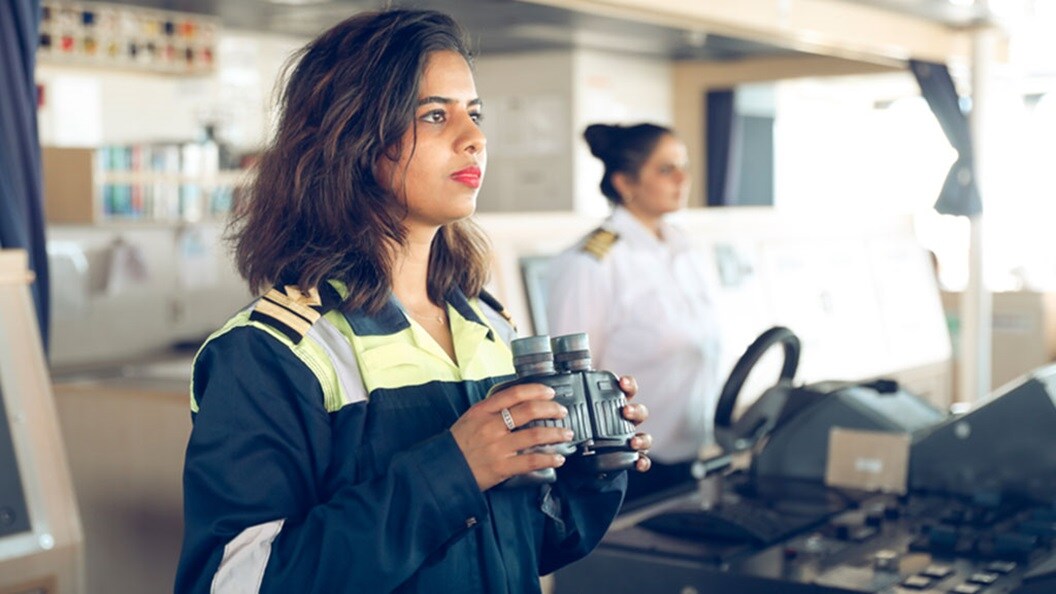
The number of women working in logistics and supply chains is at an all-time high. Gartner’s most recent Women in Supply Chain survey found that women now make up 41% of the supply chain workforce. However, a deeper dive into the data shows that female representation is still lacking in leadership and frontline roles.
What does it take to encourage more women to logistics and supply chain jobs? What does it take to keep women in the industry, and improve their representation on the frontline and in the C-Suite?

Women on the frontline and in the C-Suite
While the overall ratio of women to men in logistics and supply chain jobs is improving, the frontline data tells a different story. Gartner found that only 31% of frontline workers are women. For example, out on the ocean, the International Maritime Organisation (IMO) says women represent only 1.2% of the global seafaring workforce.
Chief Officer Eva Lisa Åhman says she was often the only woman on board when she started working on ships 13 years ago. She notes that gender diversity is improving and many shipping companies have made attempts to foster a safe and inclusive workplace for all seafarers, regardless of their gender, background, religion, and sexual orientation.
“Now they’re trying to encourage diversity and putting more women together on the same ships. This is one of the biggest changes,” says Eva Lisa Åhman. “In the past, females have been abused and harassed, and that has come to light. There has been a lot of focus on this, and we are slowly getting there”. Other changes that she believes have made working on ships better for women include changing the uniform and putting sanitary products in the washrooms.
US-based truck driver Vanita Johnson has also seen changes on the road. According to Women in Trucking, only 13% of drivers are women, but Vanita Johnson says: “When I first started three years ago, I saw one woman driver a week. Now I see three or four a day . . . You’re starting to see our face. On social media, you’ll see a lot of the women. They’re posting, they’re blogging, they’re communicating and telling their stories”.
Women in logistics - taking the lead
In the world of logistics and supply chains, women are also less likely to hold leadership positions. The Gartner survey also found that less than one-third of managers, supervisors, and senior managers globally are women.
This has been an area of focus for Women in Logistics and Transport (WiLAT). “We are not saying that women are better than men,” says Global Chair, Vicky Koo. “We are just saying that women can also work with men and should be given equal opportunities. In all scenarios, including promotions and decision-making.”
WiLAt argues that having women in the C-Suite helps companies perform better. In fact, a Boston Consulting Group study found that diverse teams have an average of 19% higher revue due to innovation.
Helping women secure leadership roles is also a focus for Women in Logistics Africa (WiLA). “There have been remarkable strides in the representation of women across supply chain levels, but when I look at Africa, we don't see a lot of women in leadership positions” says WiLA’s Founder and Director, Christiane Ohin-Traoré.
“We have many, many different challenges. For example, a lack of representation and gender diversity in logistics leadership positions. Another one is a gender stereotypes, cultural bias that's in the women's careers progression in logistics, harassment, and discrimination in the workplace, including unequal pay, limited promotion opportunities and work environments,” she says.
The next steps towards change
Businesses are slowly changing to attract and retain women in logistics and supply chain roles. There are several elements that are key to improving gender diversity in logistics, including in frontline and leadership roles. They include:
- Offering equal benefits and pay
- Offering attractive working conditions, including flexibility
- Providing training and mentoring opportunities to help women progress
- Taking steps to change perceptions and foster a culture of safety and inclusion
To hear more from women in logistics and how to encourage more to consider careers in logistics and supply chain, listen to the Beyond the Box podcast.

Get insights from an industry expert


Don’t miss out on logistic news and updates from us
You did it, welcome onboard!
We're sorry, but there was a problem sending your contact request.
Please review the form fields and ensure all required information is provided correctly. If the issue persists, please contact our support team for further assistance.
Don’t miss out on logistic news and updates from us
Sign up here and receive news and insights that help you navigate supply chains, understand industry trends, and shape your logistics strategy.
I agree to receive logistics related news and marketing updates by email, phone, messaging services (e.g. WhatsApp) and other digital platforms, including but not limited to social media (e.g., LinkedIn) from A. P. Moller-Maersk and its affiliated companies (see latest company overview). I understand that I can opt out of such Maersk communications at any time by clicking the unsubscribe link. To see how we use your personal data, please read our Privacy Notification.
By completing this form, you confirm that you agree to the use of your personal data by Maersk as described in our Privacy Notification.