PODCAST: Are we there yet? The road to net zero GHG emissions in shipping

 LinkedIn
 Facebook
 X.com
X.com
 WeChat
 Email
Email

In 2023, the International Maritime Organisation (IMO) revised its greenhouse gas (GHG) strategy and set a new target: for the shipping industry to reach net zero emissions by or around 2050. In December, the chief executive officers (CEOs) of leading global shopping lines came together in an unprecedented collaboration to share their vision to accelerate decarbonisation.
So, how far have we come on the road to net zero GHG emissions in shipping? And what can we expect in the years to come?
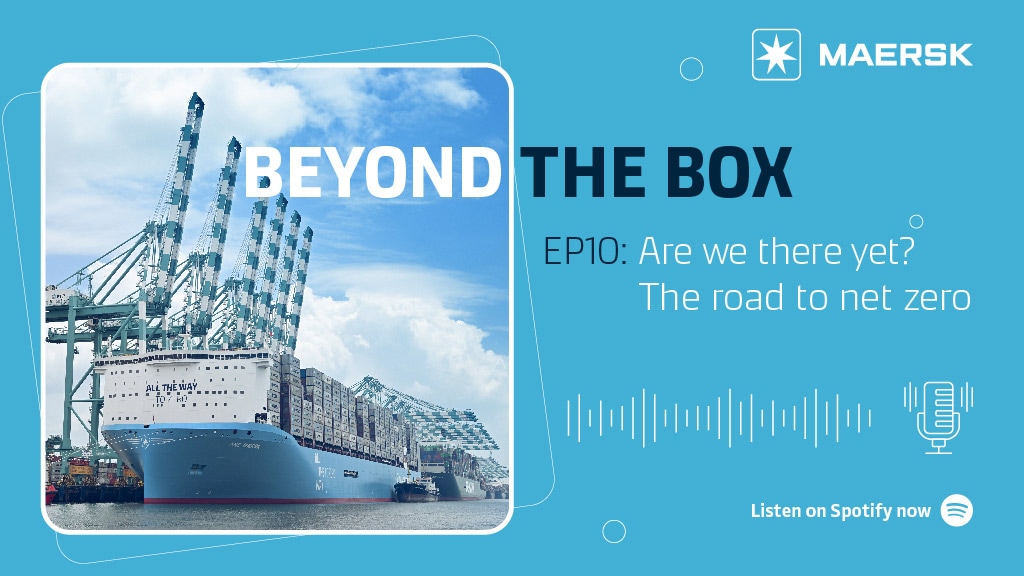
What does "net zero" mean and how to achieve it in shipping?
As the United Nations puts simply, "net zero" means “cutting carbon emissions to a small amount of residual emissions that can be absorbed and durably stored by nature and other carbon dioxide removal measures, leaving zero in the atmosphere“.
More than 140 countries - including China, the United States, India, and the European Union – have set net zero GHG emissions targets. This covers about 92% of GDP and 88% of emissions worldwide. At the same time, over 7,000 companies have joined the Science Based Targets (SBTi) Corporate Net-Zero Standard to reduce their GHG emissions using scientific data.
Chief Officer of Government, Business & Analytics at the Maersk McKinney Møller Center for Zero Carbon Shipping, Pernille Dahlgaard, explained why getting to net zero GHG emissions in shipping matters for the Beyond the Box podcast: “If we want to have a pleasant place to live, we need to do something for the climate”.
Head of Decarbonisation for towage company Svitzer, Gareth Prowse, also spoke to the podcast and said that businesses should take their share of the responsibility for decarbonisation. He added that not preparing for what’s to come “is a business risk”. He said: “if we don’t do something to prepare now, we won’t be able to respond in the future when it becomes a much more acute issue, including through the regulatory structure”.
What will it take for the maritime shipping industry to get to net zero GHG emissions?
According to the podcast’s guests, achieving net zero GHG emissions for the shipping industry requires progress on several fronts, including:
- Improving energy efficiency onboard vessels
- Scaling the production of reduced GHG emissions fuels* to meet demand
- Supporting first movers and fast followers
- Policy and regulations to promote progress towards decarbonisation
“Collaboration and transparency and, ultimately, a commitment to work together to solve the issues will be key,” says Gareth Prowse.
The coming years will be crucial to reach the goal of net zero greenhouse gas emissions in the maritime sector. This will lead to alternative options for transporting cargo and take us closer to decarbonising logistics.
However, Chief Sustainability Officer for the chemical tank owner Odfjell SE, Øistein Jenson, cautioned against waiting for more developments before taking steps on GHG emissions reductions. “Good intentions can become an enemy,” he said. “Instead of doing what you can do today with what you have available, you’re waiting for this fantastic solution to solve your problems long term. That won’t happen. You need to do what you can today”.
Subscribe to the Beyond the Box podcast on Spotify or Apple Podcasts.
*Maersk defines "low GHG emissions fuels” as fuels with 65-80% lifecycle GHG reductions compared to the fossil reference of 94 g CO2e/MJ, calculated following the REDII methodology.

Get insights from an industry expert






Don’t miss out on logistic news and updates from us
You did it, welcome onboard!
We're sorry, but there was a problem sending your contact request.
Please review the form fields and ensure all required information is provided correctly. If the issue persists, please contact our support team for further assistance.
Don’t miss out on logistic news and updates from us
Sign up here and receive news and insights that help you navigate supply chains, understand industry trends, and shape your logistics strategy.
I agree to receive logistics related news and marketing updates by email, phone, messaging services (e.g. WhatsApp) and other digital platforms, including but not limited to social media (e.g., LinkedIn) from A. P. Moller-Maersk and its affiliated companies (see latest company overview). I understand that I can opt out of such Maersk communications at any time by clicking the unsubscribe link. To see how we use your personal data, please read our Privacy Notification.
By completing this form, you confirm that you agree to the use of your personal data by Maersk as described in our Privacy Notification.