Past their prime: Are the UK and Ireland’s ageing warehouses struggling to keep up with the times ?

 LinkedIn
 Facebook
 X.com
X.com
 WeChat
 Email
Email

The warehousing landscape in the UK and Ireland is undergoing a transformation across multiple fronts. On the one hand, Ireland’s continuous economic growth has led to a need for more warehousing space and logistics efficiencies that would facilitate the movement of goods. In the UK, meanwhile, the ramifications of Brexit intensified the need to secure storage within the country’s borders, and the aftermath of the 2020 pandemic and geopolitical situation have led businesses across the world to follow suit.
A Europe-wide change in sourcing patterns is also expected to affect the demand for warehousing space in prime locations, and the emergence of new ESG (Environmental, Social, and Governance) regulations for commercial buildings in the UK could intensify this pressure as existing facilities fail to meet the government’s requirements.
Out of the old, into the new
The UK boasts the most mature logistics market in Europe, largely propelled by the early adoption of outsourcing non-core activities by manufacturers and retailers. This strategic move has not only fuelled the country's logistics sector but also brought about a rapid rate of expansion compared to its EU counterparts. Today, the UK leads the way in industrial and logistics real estate investments in Europe, with over 14 billion euros invested in 2022. Ireland, with 450 million Euros invested in 2022 and 950 million the year before, currently holds 10th place in Europe.

In a highly developed market, warehousing facilities need to rise to the standard that their occupiers are expecting – whether it is increasing operational and energy efficiencies or following the latest warehousing trends. With 82% of warehouses in the UK dating from before 2000 , and only 5% constructed in the last decade, many of them do not meet the latest technological advancements or environmental standards.
Newly built facilities that do meet these requirements, with for example EPC (Energy Performance Certificate) grade-A rating, are now a hot property, particularly in well-located places such as the so-called ‘Golden Triangle’ around the East Midlands.
Likewise in Ireland, tenants are leaving smaller legacy units and moving into contemporary ones that match their specifications – over the past five years, take-up of units built before the 2000 has declined from 63% to 30%. With many businesses now looking for contemporary buildings, does the current market have enough space to accommodate the demand?
Warehousing development trends and vacancy rates
Last year, Irish warehousing market saw a 10% increase in take-up of warehousing space compared to the previous year, together with over 2 million square feet of newly built space. This year however, challenges affecting industries beyond warehousing, such as high material cost, increased interest rates, and labour shortages are projected to hinder previously set development numbers – the current expectations suggest the market will see 898,000 square feet of new space, versus the 2.9 million estimated at the beginning of last year.
Bringing additional space into the market has seen vacancy rates across the Ireland go up, however at 1.5% they still remain below the European average currently estimated at 5.8%. Somewhere in between the European average and Irish high occupancy is the UK, where vacancy rates decreased from 13.9% in 2011 to 3.3% in 2022, despite large development pipelines across the country that recently saw the equivalent of 126 football pitches of warehousing space added to the market.
As businesses move away from just-in-time supply chains and adopt a just-in-case approach of keeping additional inventory close to the market, vacancy rates are expected to remain tight. When building up inventory, securing ample storage space is only one piece of the puzzle – the location of the inventory plays a crucial role in ensuring this inventory can reach its final destination with accuracy, flexibility, and ease.
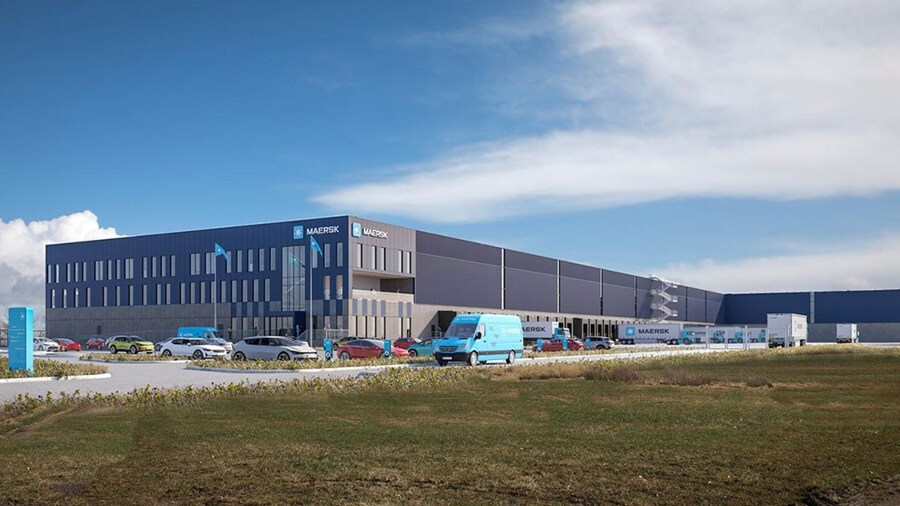
In the UK, central locations, particularly in the East Midlands area, offer the possibility to reach 90% of the country’s population in four hours. This is also the region with the largest warehousing development pipeline, and home to Maersk’s East Midlands Gateway campus.
The logistics market in Ireland is concentrated around Dublin, where many technology and pharmaceutical companies have established their head offices. This has brought about an increase in economic prosperity and standard of living, putting emphasis on both import and export flow of goods. To cater to businesses needing more contemporary storage solutions around Dublin, Maersk recently launched two new facilities focused on modernised storage (certified LEED Gold and BREEAM Excellent).
Transforming warehouses to fit new energy efficiency standards
The demand for new and modern warehousing space across the UK and Ireland has been amplified by the countries’ climate initiatives – the UK has committed to bring all greenhouse gas (GHG) emissions to net zero by 2050, and Ireland aims to halve their GHG emissions by 2030 and eventually become net zero by 2050.
For warehousing sector, this means that to help achieve net zero GHG emissions ambitions, new and existing units will need to follow legislations that set a minimum requirement of energy certification for all commercial buildings. Since April 2023, all leases for commercial buildings across the UK must meet at least an Energy Performance Certificate (EPC) grade E. In 2027, this requirement will climb to grade C, to ultimately reach grade B by 2030.

According to estimates from Knight Frank, this would mean that around 18% of the current warehousing space could see itself out of commission by 2027 for failing to meet the minimum EPC grade C. When minimum EPC grade B is introduced in 2030 this number could triple, resulting in over 50% of warehousing space becoming unlettable and obsolete – adding further pressure to the supply of warehousing space.
From regions across the country, East Midlands leads the way with 61% of EPC certified warehouses rated B or above, while other regions are taking longer to adjust – it is estimated that the South West would take the longest, until 2044, to upgrade its existing warehouses to EPC grade B.
As occupiers become increasingly focused on ESG credentials of all aspects of their supply chains, many warehousing providers have taken their environmental certifications further, voluntarily opting for additional ones, such as the Building Research Establishment Environmental Assessment Method (BREEAM). The number of units with BREEAM certification in the UK has been consistently growing, with 62% of certified units receiving a “Very Good” rating, demonstrating logistics providers’ commitment to delivering on their customers’ expectations and securing new contracts.
The increased need for modernization and operational and energy efficiency in warehouses, driven by both government regulations and heightened consumer demand, is changing the warehousing industry. As businesses strive to meet evolving environmental standards and consumer preferences, the emphasis on upgrading facilities to meet these demands not only ensures compliance but also fosters positive impacts on efficiency and GHG emissions reductions throughout the supply chain.

Get insights from an industry expert










Don’t miss out on logistic news and updates from us
You did it, welcome onboard!
We're sorry, but there was a problem sending your contact request.
Please review the form fields and ensure all required information is provided correctly. If the issue persists, please contact our support team for further assistance.
Don’t miss out on logistic news and updates from us
Sign up here and receive news and insights that help you navigate supply chains, understand industry trends, and shape your logistics strategy.
I agree to receive logistics related news and marketing updates by email, phone, messaging services (e.g. WhatsApp) and other digital platforms, including but not limited to social media (e.g., LinkedIn) from A. P. Moller-Maersk and its affiliated companies (see latest company overview). I understand that I can opt out of such Maersk communications at any time by clicking the unsubscribe link. To see how we use your personal data, please read our Privacy Notification.
By completing this form, you confirm that you agree to the use of your personal data by Maersk as described in our Privacy Notification.